Category: Food and Drink

  • Shiraz Viognier Review

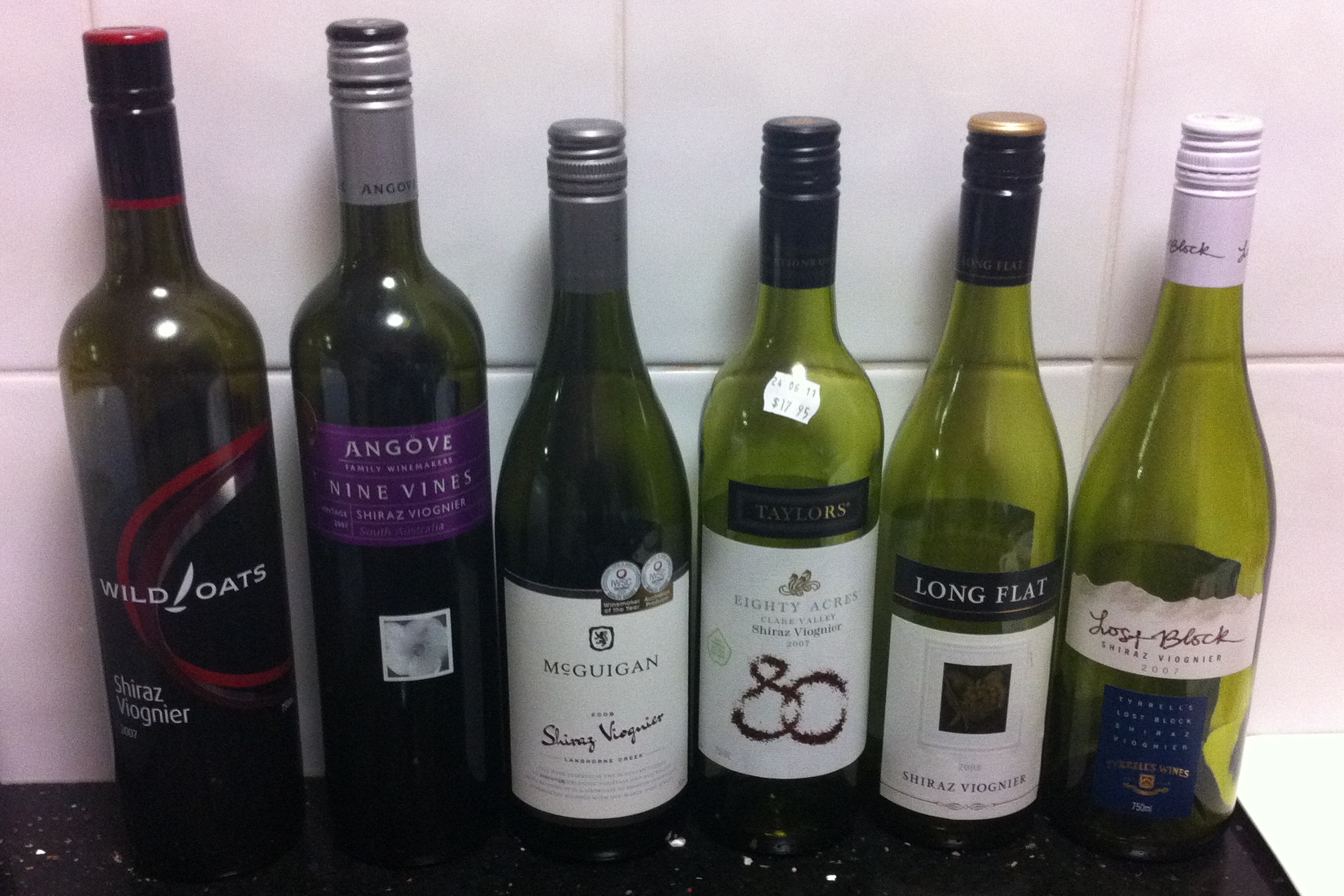
    As our time in Oz is drawing to a close, it’s time to review Shiraz Viognier blends based on our tasting notes. To start, we were unable to find the wine that we tried so many years ago. That said, we’ve tried a lot of them over the past couple of weeks, and here’s what we’ve learned.

    Six Shiraz Viogniers–Tastiest on the Left
    IMG_0332

    The first thing that we learned is that we are tired of shiraz viognier blends. We won’t be drinking these again for awhile. It’s not that they aren’t good, we’ve just gone overboard on one style.

    The second thing that we learned is that the best SV blends are out of our price range. What various sources have rated the best red wine made in Australia is a SV blend from around Canberra, but we did not taste it. Who knows how good it could be.

    The third thing that we learned is that SV blends differ a lot, at least according to our non-expert palates. Ostensibly, the purpose of the blend is to improve the smell (eh, “bouquet”) and to smooth out the edges of a shiraz. We’re not sure what’s going on in these wines, but they varied from big, smooth, and what we (non wine experts) describe as “mouthy” flavors (Wild Oats, on the left) to thin, very acidic, and almost “alcohol-y” flavors (Lost Block, on the far right). The two on the left were quite good. The two on the right, not so much.

    So, in the end, lots more to study, and lots more to try in the future, and no great discoveries about the best exemplars of this variety. We are planning a night out for dinner tomorrow, and we will try one of the many other styles made around here then.

  • Aussie Pride

    This post builds a bit on the last one. I’m not sure if it’s just that I’m paying more attention during this trip, but compared to any other country I’ve ever visited, Australian nativism seems to be a bigger deal here than anywhere else. What I mean is this: “Australian made” is stamped on everything that it could be possibly stamped on. It’s on food, on consumer goods, on cars, everything. It’s most obvious on food, and most ridiculous too.

    The picture below sums it up–Kraft is certainly not an Australian brand and this shouldn’t be fooling anyone. But someone thinks it’s a good idea to put “100% Aussie Peanuts” on the jar. They must think they’re appealing to someone.

    100% Aussie Peanuts

    IMG_0304

    This seems to be something different than the locavore movement in the US or the regionalist cuisine movement everywhere else. In France, for example, no one cares that the butter is French specifically, what matters is the region. At our local supermarket in Ithaca even, “Grown in the USA” is becoming less important than “locally sourced.” I’ve heard that people can get pretty excited about Korean rice and beef in Korea or Japanese whatever in Japan, but even there regional origins seem more important. In Australia, from what we’ve seen (and wine is the exception), the main issue is simply whether or not the food is made in Australia or not. We haven’t seen “Queensland pineapples” or “Tasmanian lamb.”

    Perhaps we’re just not looking in the right places. I wonder what this is all about.