Author: tompepinsky

  • Linguistic Rules and Malang Backwards Language

    Just about two years, I wrote a short post about boso walikan Malang, or Malang backwards language. This is neat kind of linguistic game found primarily in the East Javanese city of Malang in which words are pronounced backwards, so boso walikan Malang -> osob kiwalan Ngalam.

    I observed in that post that to the best of my knowledge, all sorts of linguistic rules continue to be followed in the backwards version:

    …the morphosyntactic constraints on word formation. For example, affixes are not included in the reversal.

    makanan [makan + an] -> nakaman, not *nanakam

    Moreover, syllable-shaping rules continue to operate.

    banjir [= flood] -> rinjab, not *rijnab
    cina [= Chinese] -> onit, not *onic.

    Returning to that same restaurant for lunch today, however, I happened upon a server wearing a pin that read ayas genaro Ngalam (sorry, no picture), meaning “I am a person from Malang.” Interestingly, this phrase violates what I take to be the very basic phonological rules that govern boso walikan.

    The specific problem is the word genaro. Were this to follow the standard way of producing boso walikan from Indonesian, this would read ayas ngaro Ngalam.

    saya -> ayas [= I]
    orang -> ngaro [= person]
    Malang -> Ngalam

    (I am not the first to have noticed this.)

    What’s going on here? Probably what happened is that the person making the pin focused on the written word orang rather than the spoken version. Because the word gnaro is not a grammatical word shape in Indonesian or Javanese, an “e” was added to make one. But this is merely a consequence of the Dutch and now Indonesian alphabet using two letters to represent one consonant (ŋ). I wonder how frequently this happens in the traditional spoken form; my guess is never. If there happen to be any experts on boso walikan reading this, leave your thoughts in the comments.
  • The American Legacy in Ho Chi Minh City

    The Southeast Asia Research Group is holding its first ever meeting in Asia at Fulbright University in Ho Chi Minh City, Vietnam this week. And so I found myself today with the chance to spend the day wandering around Ho Chi Minh City with a friend. Although we didn’t set out to do this, our walkabout was full of remnants of the American war in Vietnam.

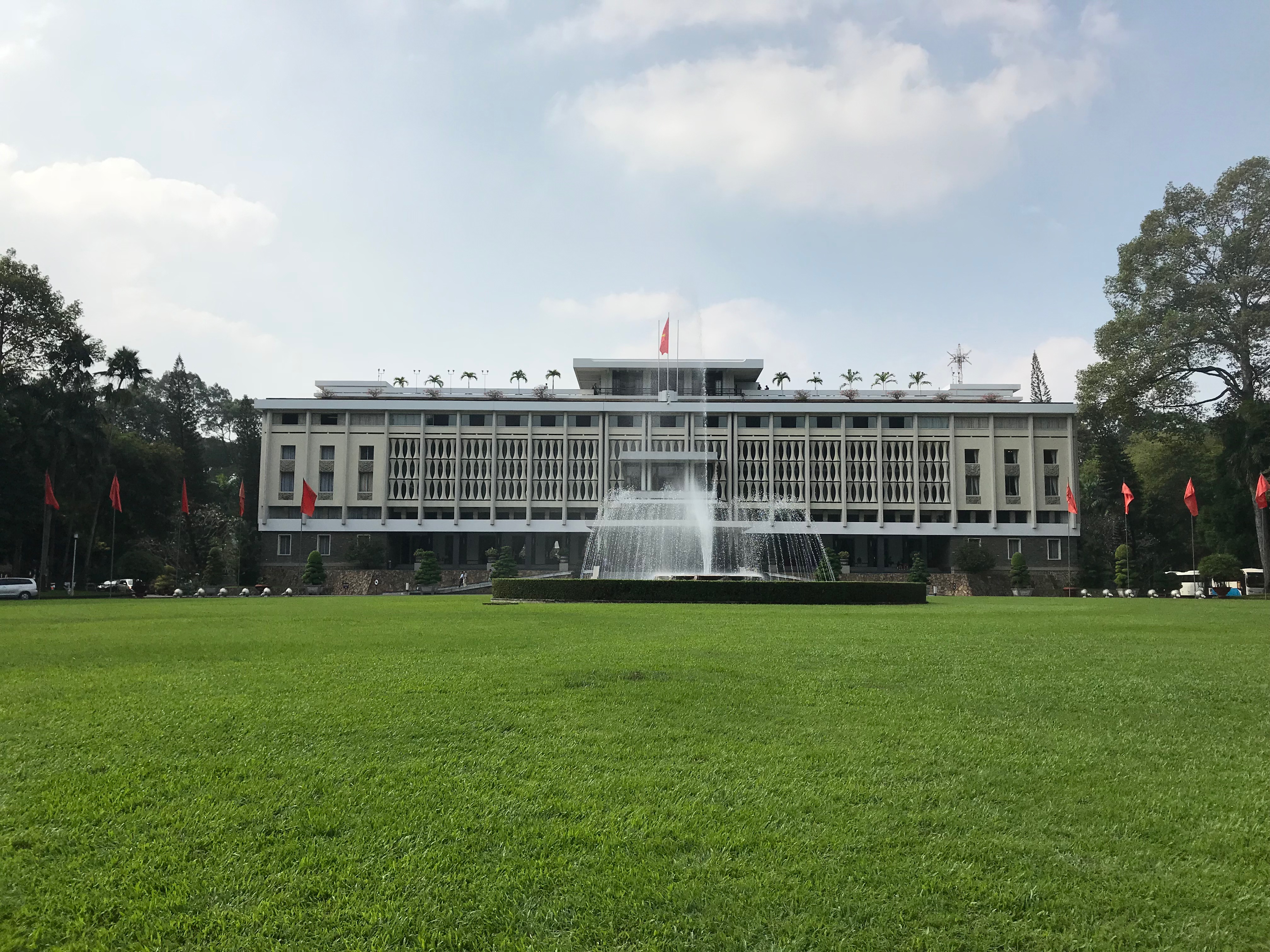
    Two places stood out in particular: the Independence Palace and the War Remnants Museum. What is today called the Independence Palace once was the seat of the South Vietnamese government.

    Independence Place, Ho Chi Minh City

    In its basement one finds a hardened bunker full of communication equipment (all made by General Electric) alongside the presidential bedroom, and a luxurious working kitchen.

    This slideshow requires JavaScript.


    There are also documents describing the so-called Ho Chi Minh and Sihanouk trails as well as a list of all foreign troops fighting in Vietnam.
    Ho Chi Minh and Sihanouk Trails

    Troop Strengths, 1968. Hoa Kỳ = USA

    The War Remnants Museum displays recovered war materiel from the Second Indochina War (which is what Americans call “The Vietnam War”). What is most striking to me is how physically imposing these American weapons of war are. There was surely urban warfare in the war in the South, but so much more of it was war in the countryside. Fighting such a war with such heavy equipment hold in high relief that how this was a war against an underresourced opponent so dependent on superior ground knowledge and logistics.

    This slideshow requires JavaScript.


    The museum also features displays of the prisons in which communists were held, including the infamous “tiger cages” which seem just impossible.
    Tiger Cages

    Perhaps the most effective part of the museum, though, are the galleries commemorating the long-term human cost of Agent Orange, war crimes including My Lai, and the international relations of the era.
    My Lai memorial, styled after the U.S. Vietnam War memorial

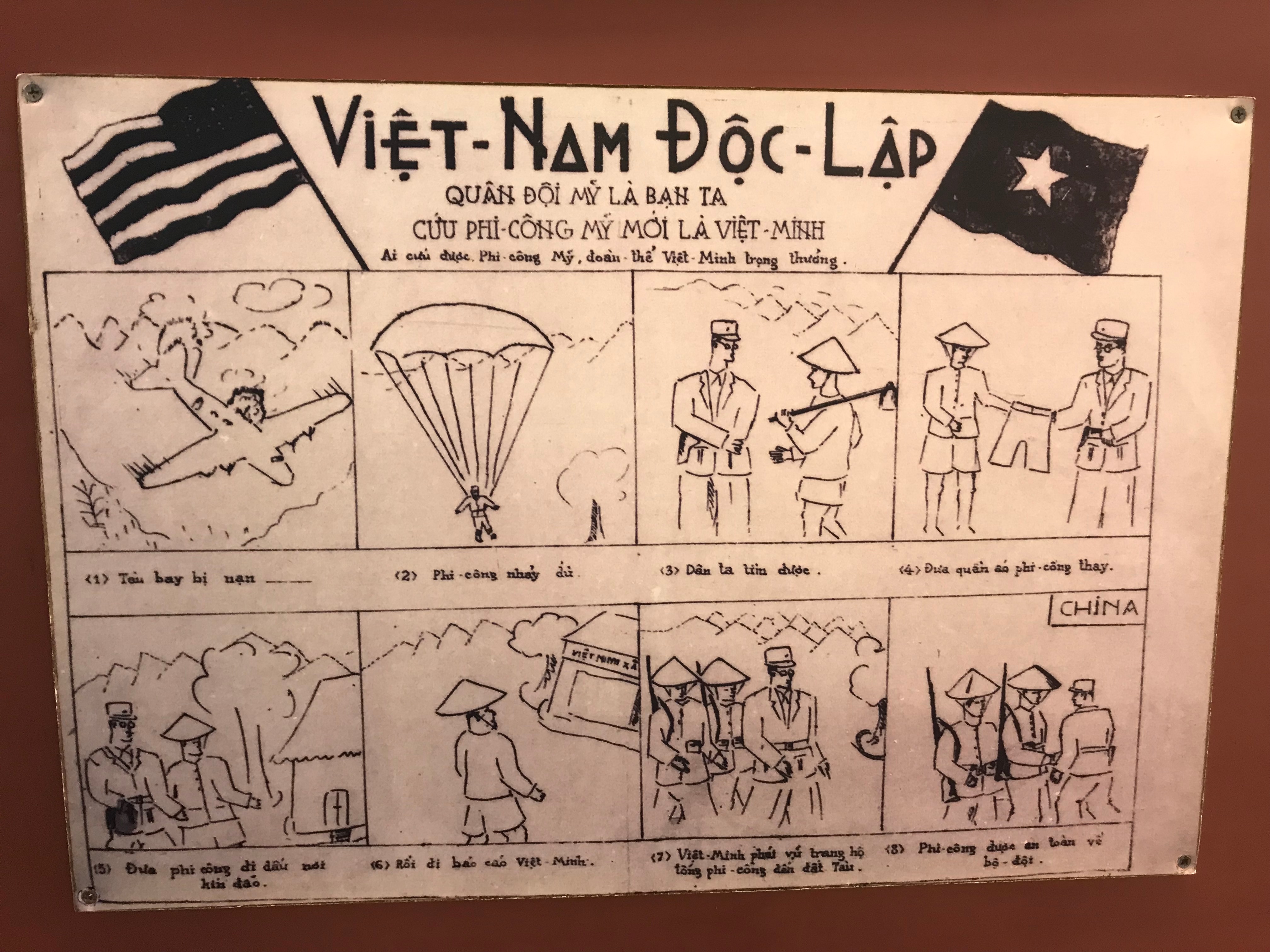
    OSS Leaflet Dropped in Vietnam in 1945 explaining cooperation with U.S. advisers

    A third-floor exhibit comprised of images taken by U.S. and other foreign journalists. It portrays with surprising effectiveness the dividedness of U.S. public opinion on the war and the costs of war borne by American servicemen themselves.

    There is, to my knowledge, no museum or commemorative of the post-1975 reunification experience.

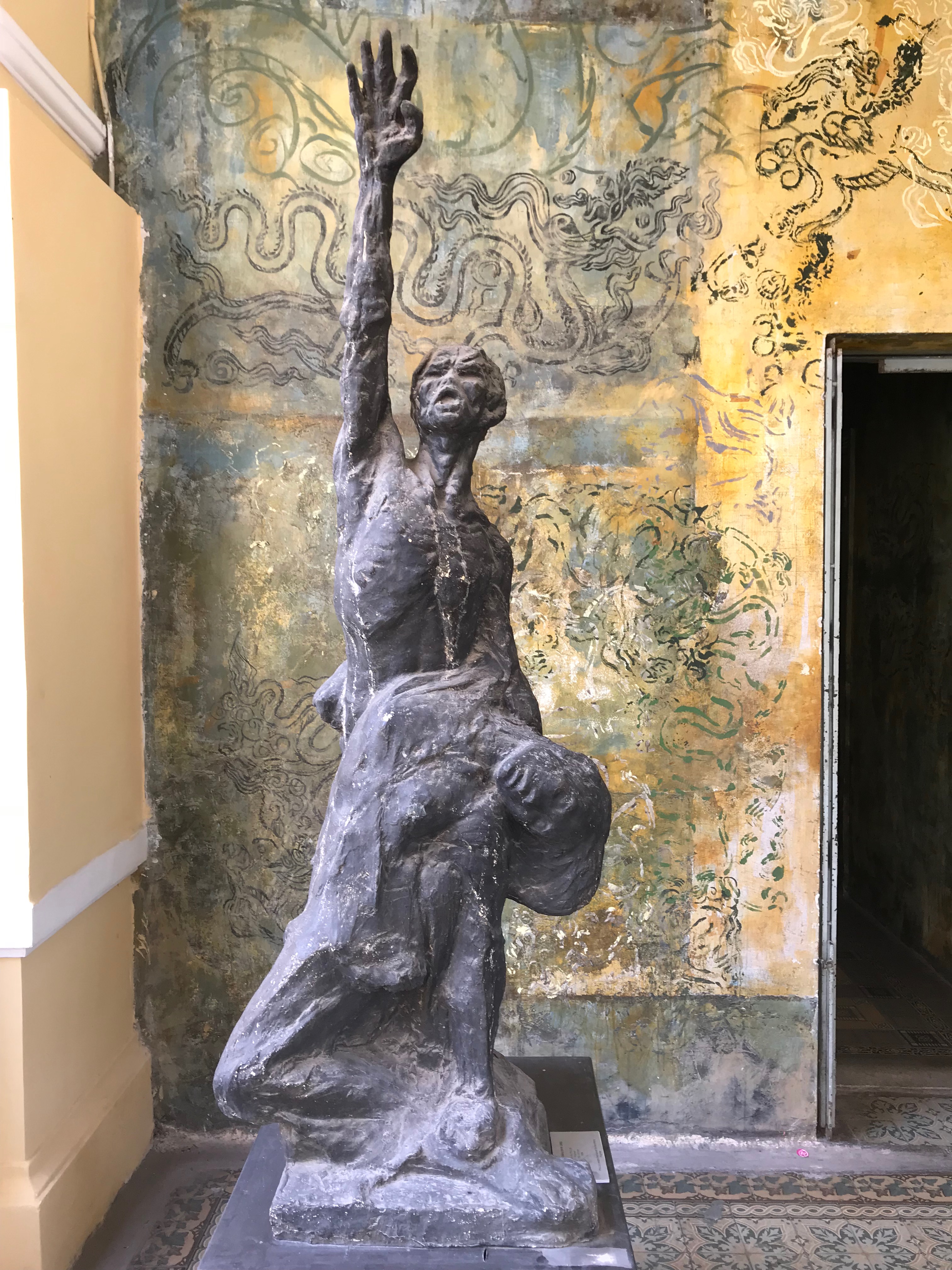
    These legacies of the American war in Vietnam coexist with other images of war, such as those found in the Fine Arts Museum.

    “Phu Loi People Feel Hatred for the Enemy,” sculpture by Diệp Minh Châu

    They also coexist with the brazen capitalism and cosmopolitanism of contemporary Ho Chi Minh City. Take a look, for instance, at the strangely cheerful Merry Christmas message at the War Remnants Museum.

    With the city’s ubiquitous Santa hats and miniature Eiffel Towers, one might not even notice those legacies of Western war in Vietnam unless one cared to look.