Category: Travel

  • British Colonial History in Penang

    Penang is well-known throughout Southeast Asia and beyond as a pleasant spot to visit. Singapore before hyper-modernization, and big enough to feature both mountains and beaches. There are lots of things that might draw a comparativist or political economist with a special interest in Southeast Asia to it: its reputation as the Silicon Valley of the East, the exquisite local cuisine, and the fact that it has long been a hotbed for what used to be Malaysia’s opposition. But for my money, the most interesting spot on the island is St. George’s church, in George Town.

    It is a lovely tropical church, boasting a brand new pipe organ inside and big open windows to move the air around. Residents are always careful to point it out that it is down the street from a Buddhist temple, a mosque, and a Hindu temple, signifying Penang’s multiethnic and multireligious character.

    But much more interesting than that are the fascinating little bits of history in the church, each of which ought to please anyone interested in the region’s political history, WWII, the Cold War, and so forth. Two are worth noting. The first is a memorial to British soldiers killed during the Malayan Emergency.
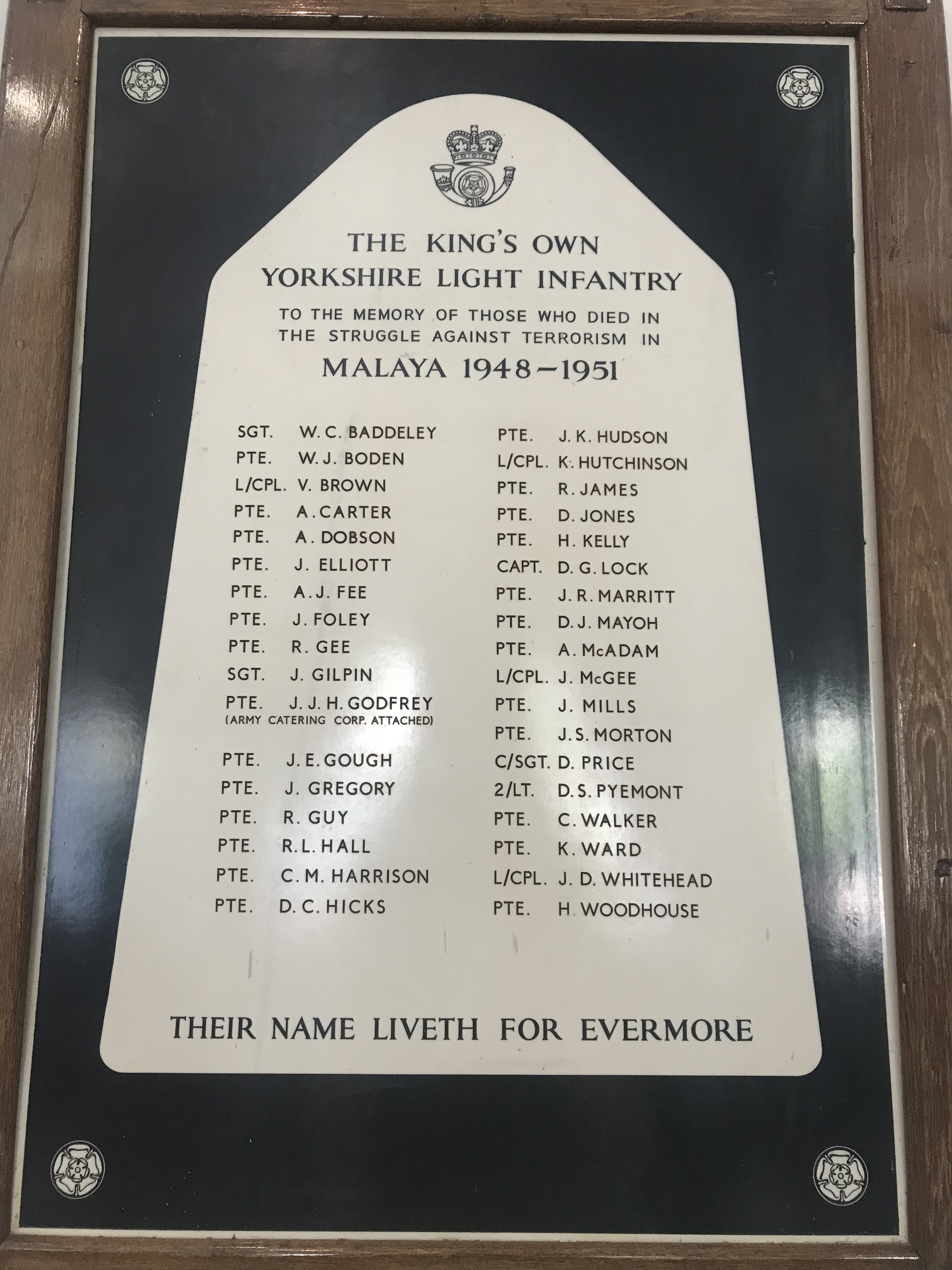
    The “struggle against terror” sounds awfully familiar. The Malayan Emergency is, interestingly enough, the source of modern counterinsurgency doctrine.

    The second is the list of chaplains and vicars, which reveals that the first ethnic Chinese vicar of St. George’s was installed under the Japanese occupation.

    I would love to know the story behind that.

    In all, this is probably the best place on the island—besides Fort Cornwallis, perhaps—to think about the British colonial presence in what is today Malaysia. This is a shame, because Penang Hill ought to be the ideal place to learn about British colonialism. There is more information about Penang Hill’s history as a hill station at its Wikipedia page than there is at the place itself. Penang Hill might be developed into a heritage site that explains the country’s colonial history; the relationship between Europeans and the weather; labor, social, and political conditions in the Straits Settlements; and all the rest. As it is, it’s too close to a theme park.
  • The American Legacy in Ho Chi Minh City

    The Southeast Asia Research Group is holding its first ever meeting in Asia at Fulbright University in Ho Chi Minh City, Vietnam this week. And so I found myself today with the chance to spend the day wandering around Ho Chi Minh City with a friend. Although we didn’t set out to do this, our walkabout was full of remnants of the American war in Vietnam.

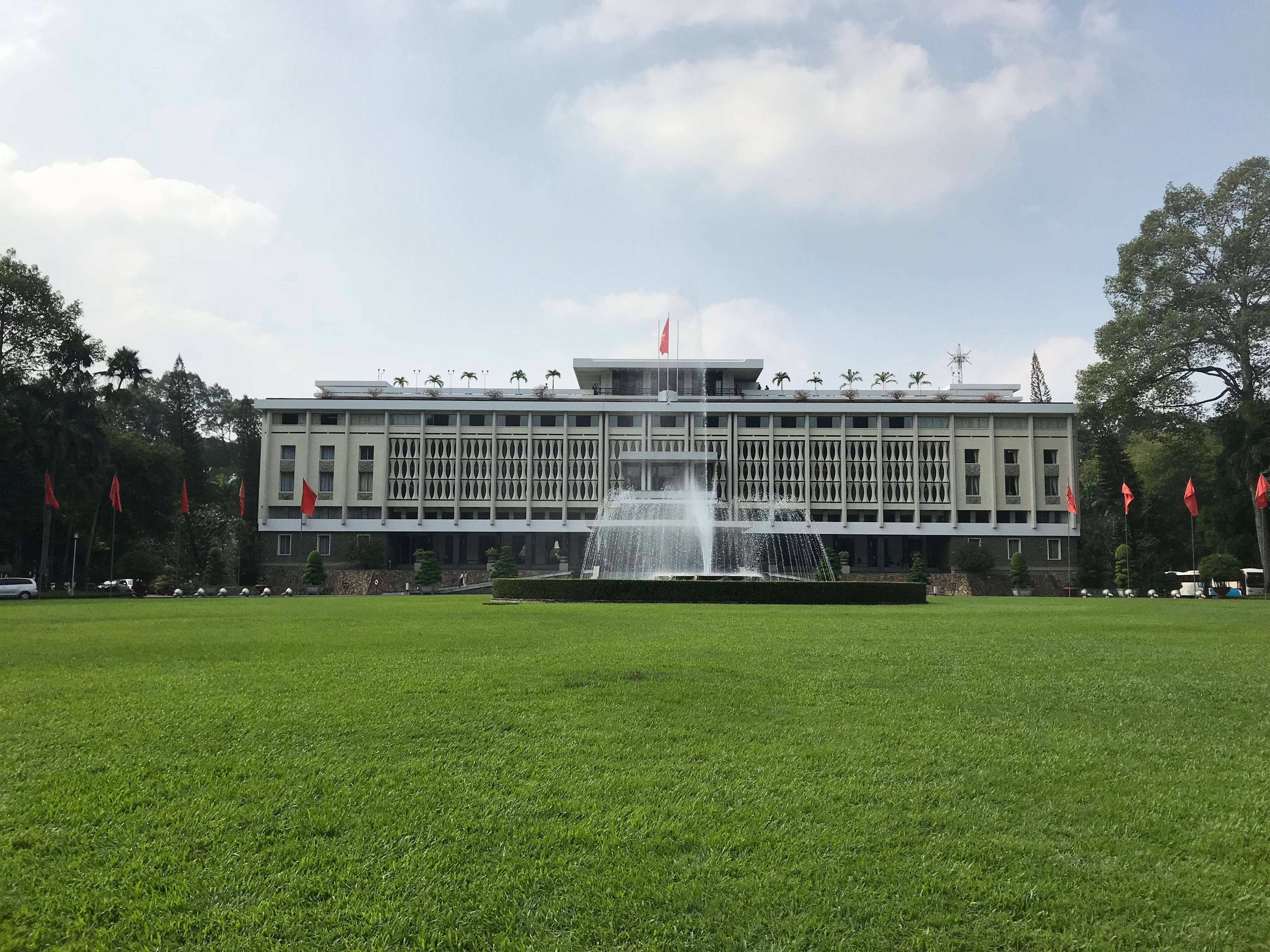
    Two places stood out in particular: the Independence Palace and the War Remnants Museum. What is today called the Independence Palace once was the seat of the South Vietnamese government.

    Independence Place, Ho Chi Minh City

    In its basement one finds a hardened bunker full of communication equipment (all made by General Electric) alongside the presidential bedroom, and a luxurious working kitchen.

    This slideshow requires JavaScript.


    There are also documents describing the so-called Ho Chi Minh and Sihanouk trails as well as a list of all foreign troops fighting in Vietnam.
    Ho Chi Minh and Sihanouk Trails

    Troop Strengths, 1968. Hoa Kỳ = USA

    The War Remnants Museum displays recovered war materiel from the Second Indochina War (which is what Americans call “The Vietnam War”). What is most striking to me is how physically imposing these American weapons of war are. There was surely urban warfare in the war in the South, but so much more of it was war in the countryside. Fighting such a war with such heavy equipment hold in high relief that how this was a war against an underresourced opponent so dependent on superior ground knowledge and logistics.

    This slideshow requires JavaScript.


    The museum also features displays of the prisons in which communists were held, including the infamous “tiger cages” which seem just impossible.
    Tiger Cages

    Perhaps the most effective part of the museum, though, are the galleries commemorating the long-term human cost of Agent Orange, war crimes including My Lai, and the international relations of the era.
    My Lai memorial, styled after the U.S. Vietnam War memorial

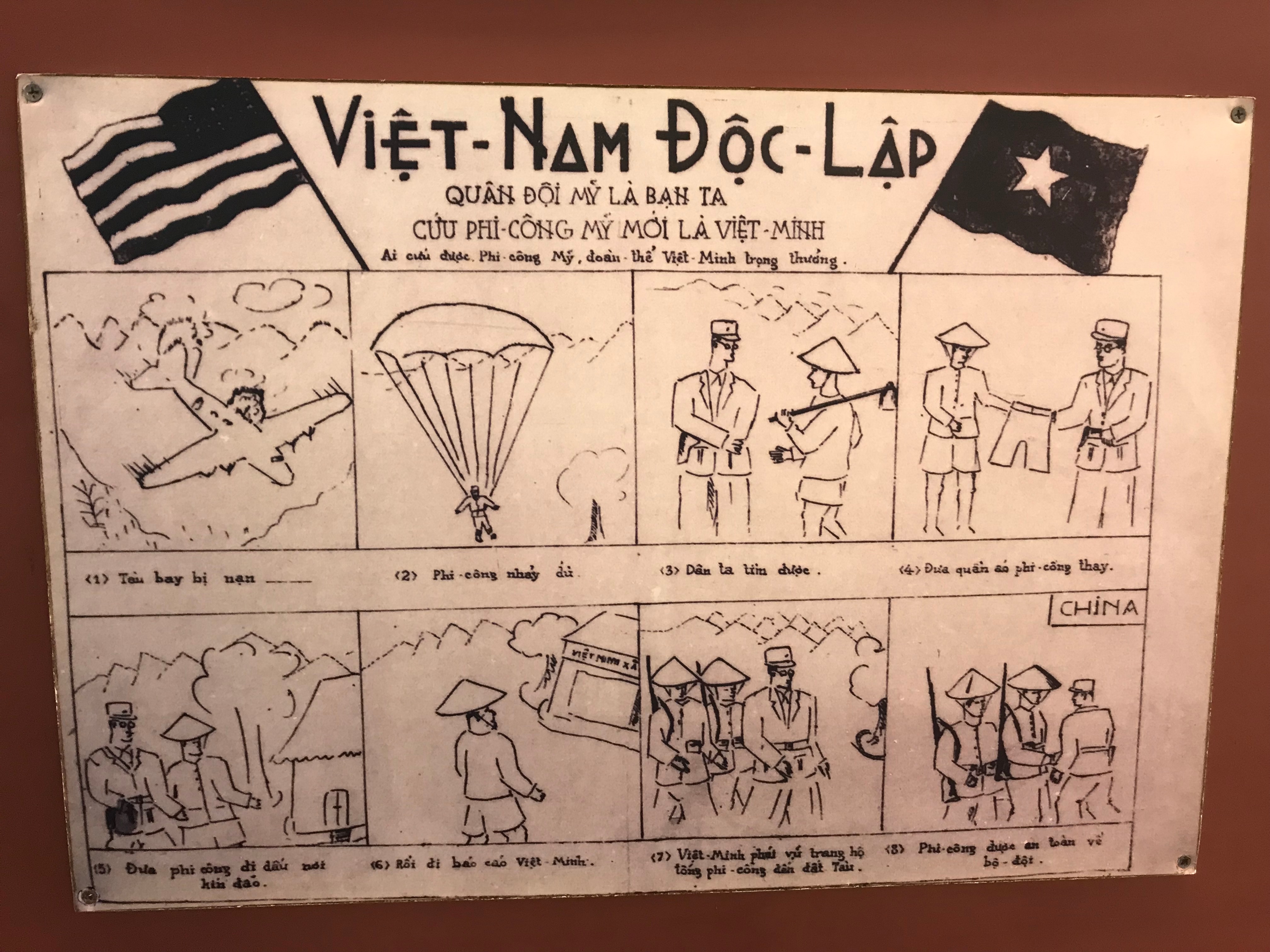
    OSS Leaflet Dropped in Vietnam in 1945 explaining cooperation with U.S. advisers

    A third-floor exhibit comprised of images taken by U.S. and other foreign journalists. It portrays with surprising effectiveness the dividedness of U.S. public opinion on the war and the costs of war borne by American servicemen themselves.

    There is, to my knowledge, no museum or commemorative of the post-1975 reunification experience.

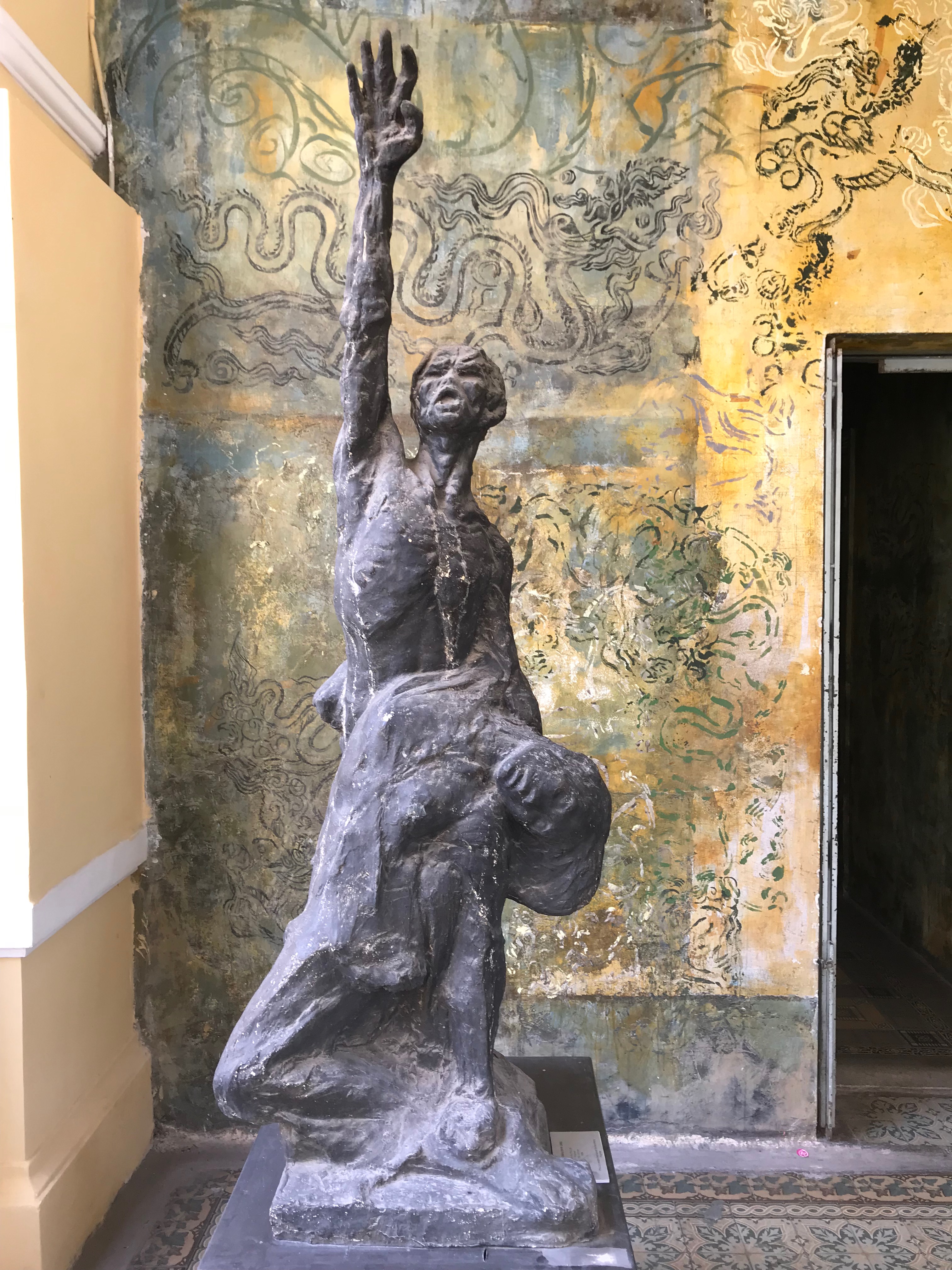
    These legacies of the American war in Vietnam coexist with other images of war, such as those found in the Fine Arts Museum.

    “Phu Loi People Feel Hatred for the Enemy,” sculpture by Diệp Minh Châu

    They also coexist with the brazen capitalism and cosmopolitanism of contemporary Ho Chi Minh City. Take a look, for instance, at the strangely cheerful Merry Christmas message at the War Remnants Museum.

    With the city’s ubiquitous Santa hats and miniature Eiffel Towers, one might not even notice those legacies of Western war in Vietnam unless one cared to look.