
This is the fifth in a series of short reviews on modern Southeast Asian fiction. There will be spoilers. As always I’m pleased to have had the chance to develop these thoughts as part of a course, so credit is due to my student as well.
Previous reviews:
- Short Reviews of Modern SEA Fiction (1): Rachel Heng, The Great Reclamation
- Short Reviews of Modern SEA Fiction (2): Gina Apostol, Insurrecto
- Short Reviews of Modern SEA Fiction (3): Ayu Utami, Saman
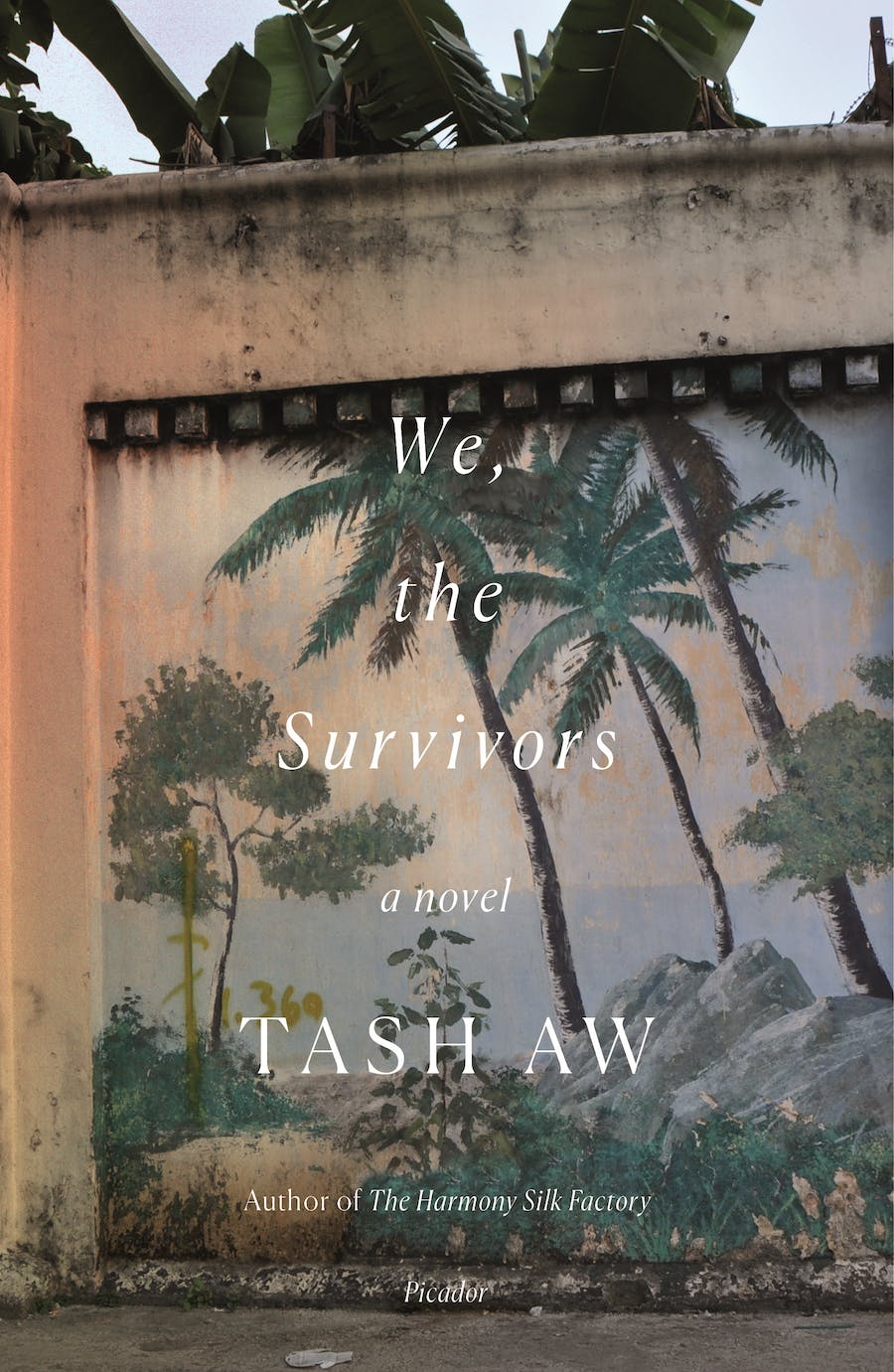
- Short Reviews of Modern SEA Fiction (4): Tash Aw, We, The Survivors
Thuận, Chinatown
When you pick up this slim and dense little book, you might infer that the basic theme would have something to do with overseas Chinese. Perhaps upon seeing the diacritics in the author’s name, you might infer that it is about a Chinese community in Vietnam, or Vietnamese of Chinese descent in some other country, like the US.

You would be right, but Chinatown is so much more than that. Thuận has written a novel that reads, in the words of my student, “like a fever dream.”* It is about identity, about place, about connections across distance, about memory and loss and sadness.
To understand why it reads like a fever dream, start with the literal structure of the novel. Chinatown is written as a single, 170 page-long paragraph. There are no indents, there are no chapters. I normally enjoy any kind of art in which the form represents the content, and here, the sentence-after-sentence-after-sentence with no breaks definitely forces you to read breathlessly, hurriedly, as if you’re in the middle of one long fever dream.
So it works—form represents content—but it is a tough read! You have to put the book down to catch your breath, because you cannot read it all in one go, but there’s no natural breakpoint in the book. Picking it up after a day or so you find yourself thrust right back into the fever dream. It is disorienting, which is obviously the point.
The content is more than just some fever dream, though. Chinatown is the daydream thoughts of an unnamed Narrator, a middle-aged Vietnamese woman living in Paris, where she teaches English. She finds herself stuck on the Métro one afternoon after an abandoned bag is discovered at a station, so everyone has to wait for the police to come and destroy it.** As she waits, the thinks about her son Vĩnh, who is the same height now as her long-lost lover and husband Thụy, Vĩnh’s father, whom she hasn’t seen in twelve years.
The book is 170 dense pages of Narrator’s rumination on her longing for Thụy, how she waits for him, how she wonders where he is, how her life has progressed in parallel with his, from Hanoi to Leningrad and back to Hanoi and then to Paris. Narrator has been moderately successful in her life, doing well in school and winning a scholarship to study in the Soviet Union, from which an opportunity to live and work in France subsequently followed. But she was unlucky to fall in love with Thụy, who is (was?) a Vietnamese of Chinese descent.***
I’ll pause here with a long aside. Hanoi, Leningrad, Paris… Chinatown is a special book because it is one of the most prominent novels about modern Vietnam that is available in English and which is not about the United States at all. I think the US war (*ahem*, the Second Indochina War) might be mentioned once or twice in passing, but only obliquely, and not as a plot point. The relevant war in Chinatown is the Third Indochina War, part of which included a short conflict between China and Vietnam. You might imagine that a Vietnamese of Chinese descent like Thụy would have a tough time in northern Vietnam under such conditions, and you’d be correct.
Chinatown is thus unlike the outstanding new English-language fiction on Vietnam and the Vietnamese diaspora by such authors as Viet Thanh Nguyen and Ocean Vuong, in which “Vietnam” is mostly the south, and there is a massive historical break at 1975. After that break, “Vietnam” is not just in Vietnam itself, it is also in Westminster, CA and Hartford, CT—to say nothing of Paris or Hong Kong. In Chinatown, though, “Vietnam” is the north, centered around Hanoi and Thụy’s hometown of Yên Khê, also in the north, in Nghệ An province. Chinatown reminds us that Vietnam’s history continued after the war with the Americans. Vietnam’s transnational history and diasporic linkages have an entirely non-American history too.
That said, I am an American reading about Vietnam. And, I am just barely old enough to be a member of the generation of Americans who have some passive knowledge of Vietnam through pop culture and the general milieu of the late 1970s and early 1980s: words and phrases like Tet, Cholon, Tan Son Nhat, Hamburger Hill, Rolling Thunder, Da Nang, Khe Sanh, Viet Cong each vaguely connote something having to do with Vietnam, even if you don’t know what exactly they refer to.**** There is no Khe Sanh in Chinatown, no mention of Hamburger Hill. Rather, the only possibly familiar term to an American of my age that shows up in Chinatown is Cholon, or in Vietnamese, Chợ Lớn, the Chinese quarter of Ho Chi Minh City whose name translates literally to “Big Market.” Click the link in the previous sentence to be reminded about why Americans talked about “Cholon.”
Narrator thinks about Chợ Lớn because that is where Thụy goes after struggling to make a life with her in Hanoi. Thụy’s family name is Ấu, which is a distinctively Chinese name, even thoughnearly all ethnic Vietnamese names have Sinitic origins. Narrator’s parents do not acknowledge Thụy, although they do acknowledge their grandson Vĩnh. Whereas Narrator ha a chance to further her education in the Soviet Union, Thụy faces constraints on his education and career options given his ancestry in the time and place where he lives. Moving to Chợ Lớn is a way to start a new, but it is also a way to leave his marriage with Narrator.
Throughout the book, Narrator recounts her time together with Thụy, but also her life abroad and apart from him. That Chợ Lớn is a “Chinatown” is not immediately obvious unless you are familiar with Vietnam, but it becomes clear as the novel progresses. Because Vĩnh has Chinese grandparents, Narrator also daydreams of his future as a representative of a Chinese company. Vĩnh, for his part, wonders why his mother never followed his father to Chợ Lớn, which Vĩnh calls “the most important Chinatown in all of Asia.”
The parallels between Thụy’s unknown life in Chợ Lớn and Narrator’s life in Paris are rather subtle, but she does remark that from the Parisian perspective, she and Vĩnh and every other Southeast Asian is basically Chinese. Vĩnh takes Chinese lessons (not Vietnamese lessons), Narrator has her hair done by a Chinese woman, she notes the Chinese shops across Paris with their waving prosperity cats, and so forth. As we read,

Narrator has gone to Paris, but for her, it is a Chinatown too.
It’s hard to summarize a fever dream, so there are many more details to this story. What I take away is how tangled the diasporic webs of identity and place can be, across borders, within borders, across oceans, and within families.
NOTES
* From our experience, I would not recommend reading this after having received your seasonal flu and/or COVID shots.
** The book was first written in 2004, so this makes a lot of sense.
*** I recommend googling Viet Hoa, which is Vietnamese for “Sino-Vietnamese,” to discover how many places of business around the world, from Minnetonka to Perth, have that name. Even the big Asian store in my home town of Harrisburg, PA is Hoa Dong [đông = east].
**** I propose that one way to demarcate the difference between Generation X and anyone who comes after is whether or not you generally know what Bruce Springsteen is talking about when he sings, in “Born in the U.S.A.,” that he had a “brother at Khe Sanh.” This generational distinction jumps out at me every time I hear Courtney Barnett‘s “Depreston,” which is about buying a house at an estate sale in the Australian suburbs in the late 2010s, and includes these lines:
Then I see the hand rail in the shower
A collection of those canisters for coffee, tea, and flour
And a photo of a young man in a van in Vietnam
Time marches on. When I was in college, I took a course on the history of the Vietnam War that had an enrollment of 200 students, almost none of them heritage students. This would be impossible today. But again, time marches on. If you’ve read this far, I give you permission to laugh at the observation that in Australian English, man, van, Vietnam, and Khe Sanh all rhyme (see, for example, Cold Chisel’s “Khe Sanh“). And actually, the Australian pronunciation of Vietnam is closer to the original Vietnamese than the American English is!

 Tom Pepinsky