
I recently had cause to take a break from being a regular political scientist to write down some thoughts on Southeast Asian studies and the concept of region. Perhaps some readers will find these interesting.
Decentering Southeast Asia
The concept of “decentering” Southeast Asia refers to three interrelated ways of reconfiguring the study of Southeast Asia. Each reconfiguration challenges received understandings of how space, place, and geography define the scope of Southeast Asian studies, and brings the questions that animate Southeast Asianists into direct conversation with other world regions in new and exciting ways.
- Betweenness The earliest works of Southeast Asian studies conceptualized the region as a periphery, border, or frontier. Thus Southeast Asia as a coherent entity emerged only in relation to neighboring Indic and Sinitic civilizations, a fact which has invited critique for as long as Southeast Asian studies has existed. Nevertheless, the concept of Southeast Asia as “in between” remains a natural way to conceptualize the region. Problematizing the betweenness of so-called peripheral regions—a common Southeast Asianist endeavor—not only challenges these practices, it also raises interesting questions for scholars of Sinitic and Indic civilizations as well. Decentering Southeast Asia can ask how encounters with the periphery shape the center, inviting reflection on the construction of Sinitic and Indic civilizations in relation to their own borders (of which Southeast Asia is but one). It also suggests a reframing of these so-called centers as itself peripheral to their own border civilizations: Mongol, Arab, and European.
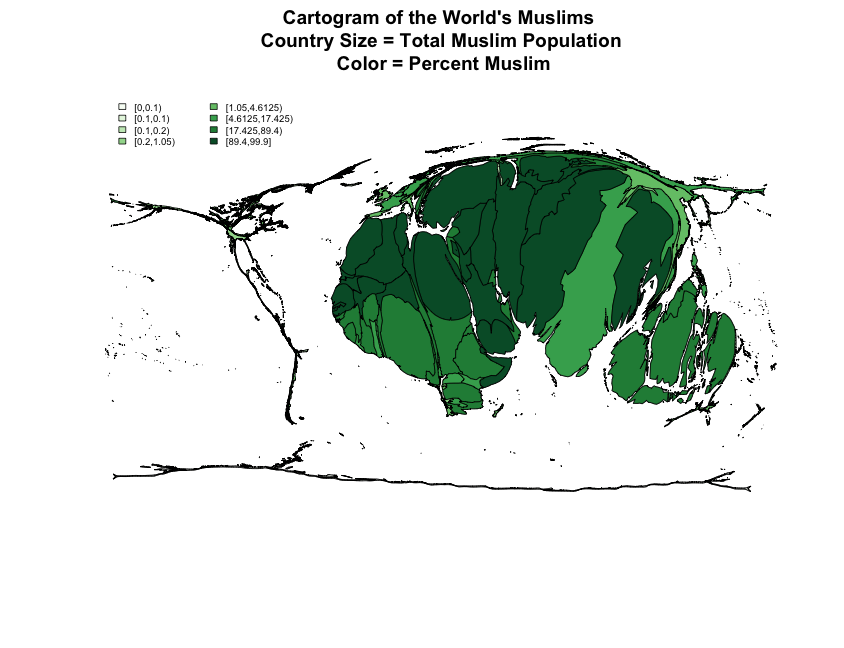
- Region Southeast Asianists are by necessity more aware of the construction of regional identities through the intellectual development of their field. Decentering Southeast Asia invites reflection on competing conceptualizations of region, capitalizing on new developments in world history, international relations, and political science that each imply different geographies for Southeast Asian studies. Four such regions that stand out in recent scholarship are Zomia, the Islamic world, the Indian Ocean world, and Oceania. Others which may prove useful include the Lusophere and Hispanosphere, Melanesia, and the Theravada Buddhist world. Southeast Asia is implicated in each of these alternate geographies, making the traditional region of Southeast Asia a particularly useful object for studying competing geographies and regionalisms.
- Jurisdiction The state has long been the organizing principle for Southeast Asian studies in the post-colonial era. Decentering Southeast Asia can also describe a process—common around the world, but particularly evident in Southeast Asia—of problematizing the boundaries of state authority. Efforts by the Thai government to shape the discussion of monarchy around the world, and by the Malaysian government to police the behavior of students abroad, are indicative of how governments are challenging their state’s borders as delimiting its jurisdiction. The reality of virtual political communities that span national borders further decenters the territorial state in Southeast Asia.
As noted, these three ways of decentering Southeast Asia are consistent with broader intellectual developments across many disciplines, from history to political science. The distinctiveness of Southeast Asia is how thoroughly it is implicated in all of these discussions.
–And with that, back to my regularly scheduled political science!
 Tom Pepinsky