
Indonesia’s capital city, Jakarta, is one of the largest urban agglomerations in the world. It is famously trafficky, polluted, and vulnerable to floods and other natural disasters. And for decades, Indonesian presidents have dreamt of a new capital city—like Brasília, Canberra, or Astana—that is more secure, more centrally located within Indonesia, and more livable.
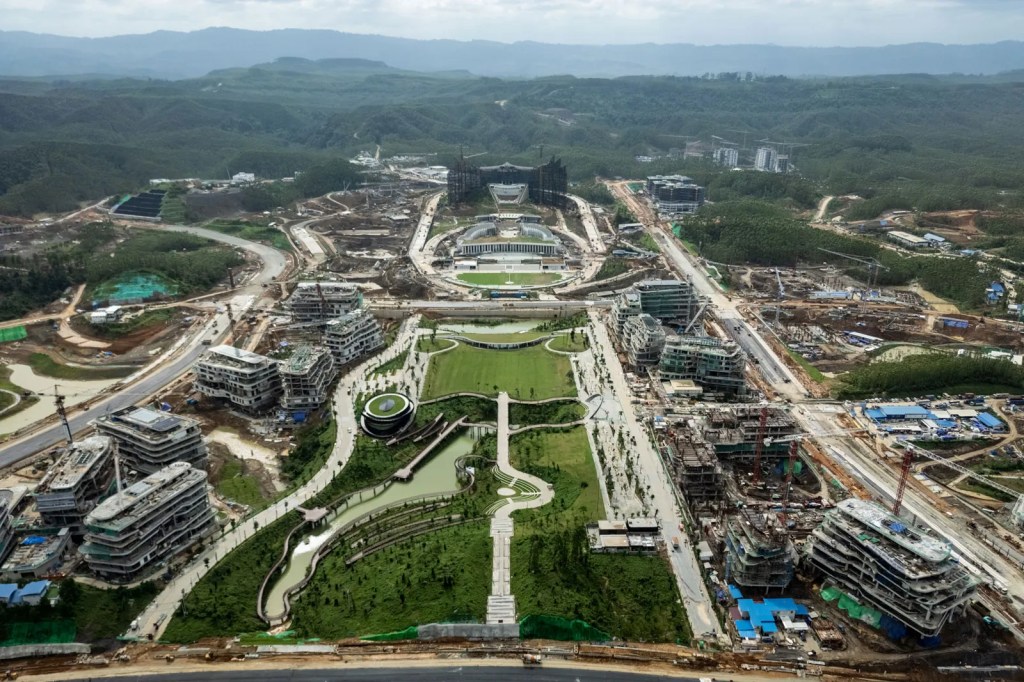
Former president Joko Widodo brought these dreams closer to reality by announcing the creation of Nusantara, a new planned capital city located in the eastern part of the Indonesian portion of Borneo. Nusantara is envisioned to be a modern, green city that serves as the seat of the Indonesian government. Developed at the site of a former eucalyptus plantation, Nusantara will avoid some of the environmental challenges that Jakarta faces, and it will also be a more strategically defensible and geographically central capital city for this sprawling archipelagic state.
Nusantara is broadly popular—just like the former president himself. But building a new capital city in a remote area is difficult, and it will be costly. Given these costs, is Nusantara actually politically feasible, especially in a difficult budgetary environment? My coauthor Aichiro Suryo Prabowo and I answer this question in a new paper (available here), entitled “From White Elephant to White Whale: The Economics and Politics of Nusantara.” The title tells you our answer. Here is the abstract.
Indonesia’s new planned capital city of Nusantara is the most significant public works project in modern Indonesian history. We study the economics and politics of Nusantara from the perspectives of public finance and political economy. Combining data from official planning documents with a large body of original public opinion data, we find that the only plausible source of revenue for a project the size of Nusantara is the state budget, and that Indonesians do not support using state funds for this purpose. We discuss tradeoffs between infrastructural investment and other forms of public spending, and between present-day investment and future debt and tax burdens, in the context of a large public investment project of uncertain long-term value.
Image credit: Britannica.
 Tom Pepinsky