Category: Food and Drink

  • NRT-SIN (Tokyo to Singapore)

    Jetlag woke me up at 3:30 AM this morning, which left me with a big chunk of time before my flight to Singapore at 11:00. Fortunately, I had a plan: head down to Tsukiji, the world's largest wholesale seafood market, to check out the action and snag a bite of super-fresh sushi. I would have preferred to have slept until 4:30 or so and gotten up in time for the first subway (left the nearest station at 5:04 AM), but since I was up far before that I decided to leave early and to walk.

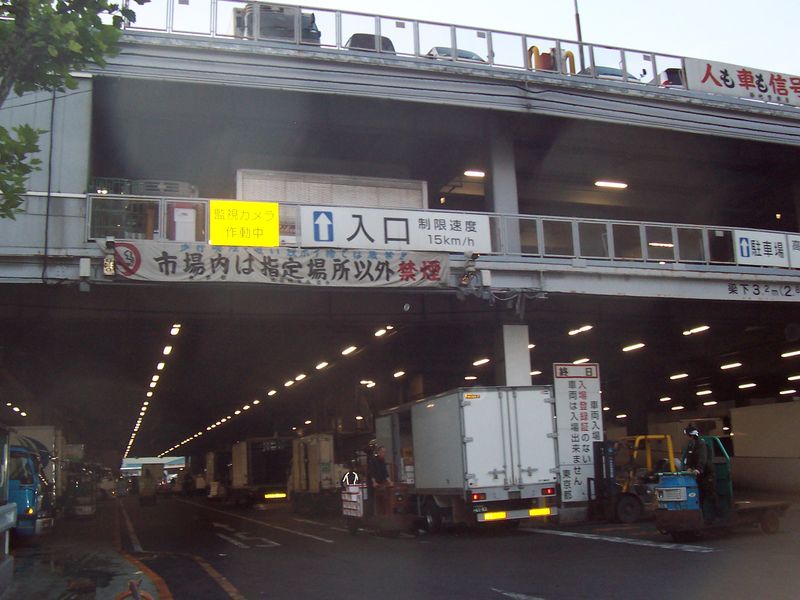
    I arrived at the market at 4:39 AM, which I thought was going to be way too early, but the place was packed with people and fish. This place is a big tourist draw, so it's a bit disorienting to learn that the place is nothing more than a big warehouse complex crawling with forklifts and semis. There's nothing charming about it in terms of a market. 

    Tsukiji Fish Market
    5-17-10.1

    The charm, it turns out, rests in the little alleys off to the side of the market, where little tiny stalls do a brisk business in the freshest sushi that you can imagine.

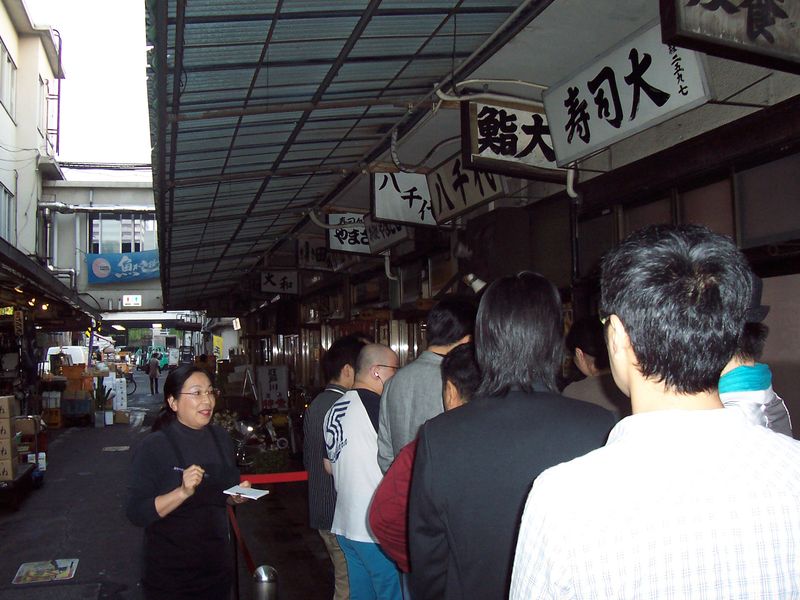
    On the recommendation of several Japanese friends, I decided to try a particularly famous one called "Sushi Dai." I had heard that it opens at 5:00 AM so I thought that it was good that I made it there so early, but it turns out that I wasn't the only one with this idea. When I strolled up around 4:50 or so, this is what I saw: a big mass of Japanese hipsters and salarymen, out for a last bite after a long night of carousing the town.

    Wait Line for Sushi Dai, 4:50 AM on a Monday
    5-17-10.2

    The woman with the pad is taking orders. The way it works is, she tells you that you can have whatever you want, but everyone orders the Chef's special…she relays that to the three sushi chefs inside, who make your sushi right at the tiny bar (which is, truth be told, only slightly bigger than our bathroom at home, and seats no more than 12 people). They take their time: the special comes with 11 pieces, and it takes about 45 minutes to an hour to go through it. Had I arrived any later it would have been way too late–I didn't get a seat until 5:45, and by 5:00 the line behind me had 30 more people in it.

    A problem arose, though. I'm allergic to shellfish, and this is one of their specialties. I had a friend write up a big long note about this to give to the chef or the waitress, and it is currently sitting at home on my printer. So, last night I took it upon myself to learn how how to say "don't kill me with shellfish" in Japanese. Here's what I pieced together from various internet forums (apologies if this is horribly impolite): Sumimasen. Watashi wa koukakurui no arerugi ga arimasu. Sakana wa OK desu. Osusume wa nan desu ka? Literally, "Pardon me. I have an allergy to shellfish. Fish is OK. What do you recommend." I whipped this out for the waitress and it seems to have worked perfectly, for the chef kindly substituted interesting fish choices for the three shellfish items he was giving out (live shrimp sushi, sea urchin roe sushi, and live octopus sushi).

    OK, enough of that, after waiting for all that time, how did it taste? I can't say that I'm the world's leading expert on sushi, but numerous Japanese people have told me that this is the best sushi in Japan, and that means that it has to be in the running for best sushi on the planet. It was clearly the best sushi that I've ever had. Everything was fantastic: so fresh, so perfectly soft, so simple and good. The biggest surprise was not the high grade fatty tuna, which was delicious, but rather the sleepers like smelt, flounder, sea bass, and my favorite, Spanish mackerel. If you've had mackerel before, you know it can be off-puttingly oily and fishy tasting. This stuff, though…the chef lightly brushed it with a sweetish salty glaze and topped it with scallions, and gave me firm instructions not to eat it with soy sauce. Nothing fishy or oily about it, just clean and tasty.

    Spanish Mackerel Sushi

    5-17-10.3

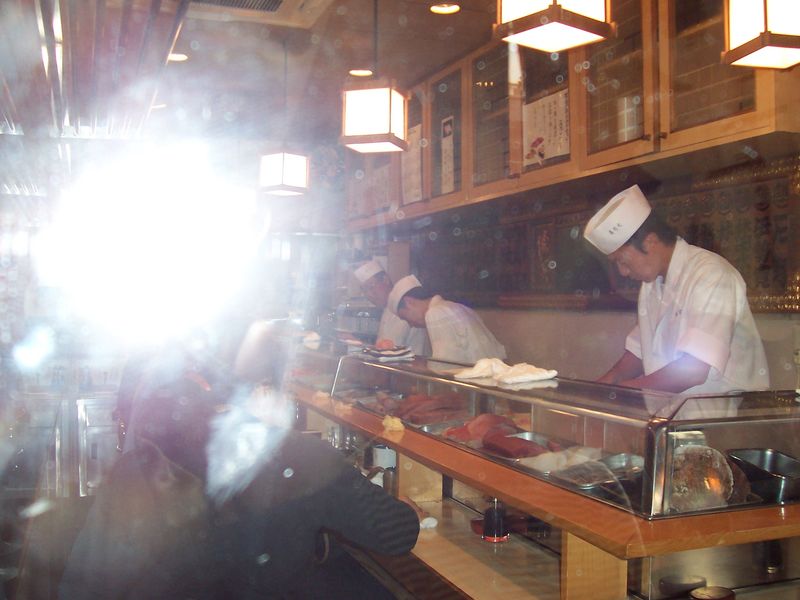
    The scene at the tiny little restaurant was also great, with Japanese chefs working their gigantic knives while screaming Japanese things at you (which, truth be told, only mean "HERE IS SOME SEA BASS" and "I HOPE YOU LIKED THAT" and "THANK YOU FOR COMING").

    The Chefs at Sushi Dai (Pardon the Flash)
    5-17-10.4

    After that great meal, I made my way back to Narita for my flight here to Singapore. This was uneventful, although it was JAL business class so it was quite nice. From one big Asian metropolis to another, then. Tomorrow the real work part of the trip begins.

  • Disappointing Meal Leads to Social Commentary

    Last night I had a disappointing meal. My first meal on this trip which really failed to live up to expectations. It was at Bakmi Gajah Mada (GM for short), a noodle restaurant which I had tried before a couple years ago and found to be "meh," but which gets a great review in the book that I use to scope out local good eats, Laksmi Pamuntjak's Jakarta Good Food Guide 2008-2009.

    And I mean, it gets a glowing review. Listen to these select quotes:

    • Bakmi GM is still on top of the game
    • the first destination of a student returning from overseas is not his or her own home, but the nearest Bakmi GM
    • everything from their original versions of noodle soup to their more recent creations…are wonderful [sic]
    • approaching legendary is the consistently brilliant fried wonton
    • the level of consistency is almost supernatural

    "Wonderful." "Brilliant." "Supernatural." "Top of the game." This from an author who does not seem given to hyperbole in her other reviews, who rates places that cost US$500 a person and finds basic faults with taste and presentation. So Bakmi GM is "brilliant"? Well OK then! Maybe I went on a bad day the other time. No worries, I'll try it again. I followed Laksmi's directions precisely this time, getting the two dishes that she recommended by name: the fried wonton (pangsit goreng) and chili-fried beef noodles (bakmi daging cah cabe hijau). To drink, fresh pineapple juice.

    Panda Express Bakmi GM

    5-26-09

    OK. First for the good news. The pineapple juice was competent. But I've never had bad fruit juices in Southeast Asia, and I mean ever. Basically they are just fresh fruit in a blender. Hard to mess that up.

    Now for the bad news. I mean, look at that. Does those plates look any different than what you'd get at P.F. Chang's? The fried wontons tasted to me just about like the fried wonton skins that you get as a free appetizer at any strip mall Chinese restaurant in the US. The only difference is that these have a tiny bit of bland chicken wrapped in the middle. The sauce was, I kid you not, that same syrupy unidentified red glop that we know in the US as "duck sauce." Duck sauce! I'm almost offended that I had to pay for what I normally consider to be complimentary appetizers. The beef noodles were no better. The noodles themselves were gummy and sticky, not properly fried and mixed with other ingredients. That's a rookie mistake, Asian Noodles 101. The beef was sticky-sweet and liberally enhanced with MSG. The peppers were fine. Did they even try here? Basically the only differences between this and an equivalent dish at P.F. Chang's is that this is cheaper and that they understand the proper ratio of noodle to condiment. (Asian noodles, much like Italian pasta, are to be dressed with their accompaniment like a salad, not drowned in it.)

    Now what's going on here? How could Laksmi Pamuntjak–a world traveller, a bonne vivante, a gastronome with three editions of a popular (and pretty expensive) English language food guide under her belt–consider this boring and uninspired food to be brilliant? My working hypothesis is that it's not about taste or presentation, but about modernity.

    When you go to Bakmi GM you're not getting authentic or even really "good" food. What you're getting is air-conditioning, waiters in uniforms, consistency, comfort, and an ambience of that middle class lifestyle that has really only been available in Indonesia for about thirty years or so. It's the same impetus that leads many very good restaurants all over Southeast Asia to locate themselves in malls. Bakmi GM is not about the food, it's about representing a certain social position. Sort of the way that McDonald's is in the US, or at least how it was when it first opened and represented the triumph of modernity, mass production, and food science over the varied competencies of local burger joints. Note the emphasize on "consistency" and the idea that it appeals to students who miss home. Maybe a parallel experience is a freshman from Orange County, CA in my Vietnamese class while I was still in graduate school who did her final presentation about the best restaurant in the world: California Pizza Kitchen.

    The problem with my hypothesis is that Laksmi P. is no aspiring middle class writer. I've met her. She's serious and far more cosmopolitan than I am. Her other recommendations have been very solid. And it can't really be her audience either, for her book cost US$26 and is entirely in English, which makes it pretty much geared not towards middle class consumers but rather for Jakarta's globe-trotting upper crust. They can absolutely afford much better than this, and they can find much tastier cheap eats at the side of any road. So call me perplexed.