Category: Asia

  • Jewish Refugees and the Resettlement of Mindanao

    Ria Sunga recently contributed a short essay on Jewish refugees in the Philippines to the Refugee History blog. The essay is full of interesting details, including the observation that under the Japanese occupation during World War II, Jewish refugees were not interned because the Japanese… considered them to be Germans.

    Having (expired) German passports, the Japanese did not intern them, unlike those with Allied nationalities in the Philippines.

    Internment conditions under the Japanese occupation were notoriously hard. It is remarkable that the small Jewish refugee population in the Philippines appears to have been spared.

    Perhaps even more interesting is the so-called “Mindanao Plan,” which called for Jews to be resettled in the Philippines large and restive southern island of Mindanao.

    Tauber and many other Jews sent letters to the Philippines, applying to enter under a special immigration programme that proposed a Jewish agricultural settlement on the southern island of Mindanao. The ‘Mindanao Plan’ was conceived after the Evian Conference, led by American President Franklin Roosevelt. The Conference sought a solution to the ‘Jewish refugee problem’, which included proposals for establishing agricultural settlements in underdeveloped regions. These plans extended to the Philippines. In 1939, Quezon agreed to resettle 10,000 refugees in Mindanao over ten years under certain conditions, including that refugees took naturalisation papers and that they would not become public charges. It was the only such plan to be seriously considered in Asia (though a similar resettlement plan was proposed by the Dominican Republic).

    The idea of resettling Jews in some “empty” territory is not new: see Madagascar, Birobidzhan, Alaska, and the Kimberley. What makes the Mindanao case interesting is that it follows a longstanding policy that Mindanao needs to be “settled.” This policy dates to the early American colonial period, addressing the legacy of incomplete control of Mindanao by the Spanish. In the words of Wernstedt and Simkins, Mindanao under the Spanish had

    failed to participate in any significant degree in the economic or political development of the Philippines.

    Indeed, Mindanao is not like other regions in the Philippines: it has a large Muslim population (termed the Moros by the Spanish, a term that persists until today), and successive colonial and post-colonial government have conceived of the region as something of a colony of the Philippines. Writes Abaya‐Ulindang (PDF),

    the Americans believe in resettling farmers from Luzon and Visayas to assume their role as model citizens of the natives in the course of interacting with them. Conceived as part of the Filipinization policy of Governor General Harrison to make a ‘Filipino out of the Moro’, the agricultural colonies were created at the end of the pacification campaign of Pershing.

    The Resettlement Policy brought Catholics from Luzon and the rest of the Philippines to Mindanao. It is an important driver of the Moro conflict, which pits some of Mindanao’s Muslim population against the majority-Catholic Philippine state. Indeed, current Philippine president Rodrigo Duterte grew up in Davao, but was born on Cebu.*

    That the Philippines’ Jewish refugees were slated to settle in Mindanao is an interesting footnote to the longstanding problem of figuring out how to incorporate Mindanao into the Philippine state. In this, it parallels the idea of using Jewish refugees from Europe to populate other “peripheral” regions in the USSR, US, and Australia. As in the cases of Alaska and the Kimberley, the main political obstacle was the fear that the Jewish refugees might not stay put in the periphery. But relative to those two cases, the Mindanao Plan appears to have been relatively more serious; had the Pacific War not broken out, it might even have been implemented.

    NOTES

    * Duterte’s former wife is of German Jewish ancestry but to my knowledge has no connection to the Jewish refugee community.
  • Illiberal Politics and the Inclusive Political Science Classroom

    Seth Masket* published an interesting piece yesterday entitled “The Crisis of Political Science Education.” Its core argument is that teachers of American politics face a new challenge under the Trump administration because partisans may hold views that are simply incompatible with maintaining an inclusive environment for all students.

    If a student says that he thinks taxes should be reduced and that anti-poverty programs tend to only worsen the problems they seek to fix, that would unquestionably be permissible partisan dialogue in the classroom, even if it provoked controversy. If that student then said that Mexican immigrants are corrupting white American culture and that “we can’t restore our civilization with somebody else’s babies,” as a Republican member of Congress said last year—is that a hateful attack or a partisan talking point? If we call it out, are we defending classroom inclusivity or are we attacking a student for his partisan beliefs?

    Masket holds that it was not always so—that diversity of viewpoints and experience was compatible with respectful cross-partisan debate—but that President Trump’s first two years in office have made this much more difficult. I’d emphasize that as I read him, Masket’s point is not that teachers of American politics never had to address challenges to inclusivity in the classroom, but rather that it was possible simultaneously to respect partisan differences and to foster an inclusive class environment. Inclusivity was not an essentially partisan problem.

    My reactions to his piece are two. First, the title worries me: think it is actually the best time ever to study political science; we should be calling this not a crisis but an opportunity!** But less self-centeredly, the piece led me to reflect on the ways in which we encounter these problems in teaching other kinds of political science.

    The specific example that comes to mind is the topic of Asian values, held by many to be a key organizing principle for understanding politics in Asia. What happens when you encounter a student who believes that one of his or her classmates is simply incapable of participating in democratic political life, simply because of that classmate’s cultural heritage or national background?

    One might confront this argument with various forms of empirical evidence—and one should. But what happens when the offending student can look to a head of state like Lee Kuan Yew who also holds such views, and who publicly champions them?*** Here, we encounter the same dilemma that Masket identifies. If we defend a student who holds the sincere belief that Asians cannot be democratic citizens, are we thereby excluding those classmates (those who are physically present, and in a more general sense) from full participation in the class? If, by contrast, we call out such a view, are we then adopting a political position by necessity? Lee Kuan Yew certainly would have thought so.

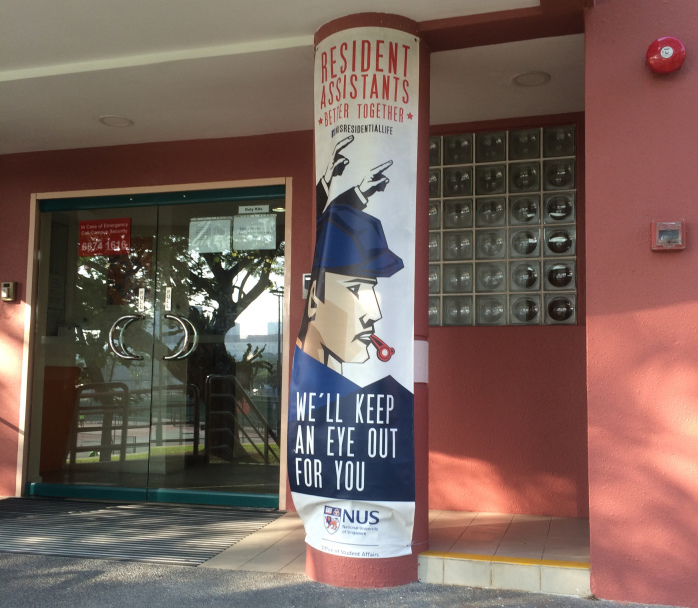
    As I write this, from Singapore, I am reminded of the alternative models of teaching that exist in universities around the world, which are deliberately designed not to encourage debate but rather to discourage it—in certain circumstances—in the interest of maintaining some sort of social order.

    In the liberal model of education, by contrast, we have to grapple with the possibility that some topics of discussion are inevitably partisan, and that that partisanship reflect more than just a sincere disagreement over political values. Acknowledging this can be liberating: it allows us to present arguments that, for example, the Asian values thesis is a discursive project designed to project a vision of society onto society itself, and that proponents of the Asian values thesis are happy exploit credulous academics for their own purposes.

    The broader point is that it has probably been always true that sincere debate over partisan ideas existed in tension with full inclusivity in the classroom. Perhaps what Masket identifies is the realization that American politics classroom discussions have for too long taken for granted the liberal democratic character of American politics. Where we do not take that for granted, the tensions that Masket identifies are all too familiar.

    NOTES

    * If you read this and are on Twitter, and somehow don’t know follow him, you should know that Seth has one of the world’s best Twitter presences, starting with the single best Twitter handle of all time.

    ** With due apologies to the motivational speaking industry.

    *** Or if your politics follows someone like Benny Aquino, who is on the record as having said much the same thing.