Author: tompepinsky

  • Deep Civil Society and Collective Action

    Deep Civil Society and Collective Action

    Journalism. Higher education. The federal bureaucracy. Nonprofits. The military. And now the law firms.

    Across the United States right now, the same conversation is happening in these and other establishment professions. Career professionals are keenly aware that the Trump administration has put their institutions under enormous pressure to comply with their demands—some of which are lawful, many of which are not—in order to preserve their access to federal funds and avoid further sanction.

    Recognizing the importance of the moment, and the systemic implications of lawsuits and pressure against any individual entity (Columbia, NBC News, Paul, Weiss) these professionals look to their owners, administrators, superiors, and founding partners for leadership and guidance. There are some positive signs of principled leadership from leading institutions, such as the recent Atlantic piece by Princeton University President Jonathan Eisgruber condemning Trump’s attack on Columbia, and Supreme Court Chief Justice John Roberts issuing a rare public statement on the independence of the judiciary branch.

    But in the main, professional leaders in journalism, higher education, the military, and the legal profession have been mostly silent. And so these conversations—will the administration come after [members of my profession]? will our leaders defend [my profession] if they come after our own institution—continue quietly, privately, at the dinner table, in the group chat, with the doors closed and the phones off.

    This is a collective action crisis for civil society. It is not an acute crisis for activists, movement leaders, and others who work at the forefront of resistance to the policy of all presidential administrations, past and present.* Rather, it is a crisis of the intermediate institutions that enable the functioning of civil society within the United States, what I call deep civil society. The legal profession, which provides activists and citizens with resources to press their demands and defend their rights. The educational sector that prepares young people for careers in the private and public sectors. Journalists who cover the most powerful politicians and oligarchs alongside the poor and the excluded. Federal workers who ensure that the laws passed by Congress are faithfully executed. And the security sector that ensures the safety and security of citizens and residents, at home and abroad.

    Despite the constant drumbeat from social media and the administration’s social media propagandists about how these institutions are poisoned by woke and captured by radicals, deep civil society is, by its very nature, fundamentally conservative. These are institutions where rank, status, and seniority are broadly accepted as natural and appropriate. They are institutions where professional and administrative staff believe in their public mission, and their public responsibility.** There are countless links between the public and private sides of deep civil society, from federal funds that support advanced research to professional relationships between officer corps and the legal profession. Academics consult with the military because both sides believe that U.S. military power must be used wisely, judiciously, and effectively. Bureaucrats leak to journalists because they know and respect one another.

    The puzzling feature of the current moment is that despite these many linkages, and despite their common concerns, there is very little public recognition of deep civil society’s common plight. It is a collective action problem in two senses. First, within each sphere, individuals recognize the value of a collective response, and fearful of sticking their head out over the ramparts. The law firms are waiting for some elite firm that will take a principled stand against the administration. Higher education is waiting for more Eisgrubers.

    But second, it is a collective action problem in that each sphere—from journalism to the security sector—is strengthened by leadership from the others. A legal profession that refuses to knuckle under makes it difficult for any administration to target journalists and teachers. A military that refuses to obey unlawful orders will not intimidate bureaucrats and public servants. And so forth.

    Overcoming collective action problems is notoriously difficult. It is especially difficult for conservative institutions facing real consequences for speaking out first. One way to incentivize collective behavior is to offer selective incentives to those who do the work of organizing and mobilizing. In this context, this means public leadership. One such selective incentive is acclaim. Some law firms, some administrators, and some bureaucrats will be remembered as Marshal Pétain. Others will be remembered as Charles de Gaulle.
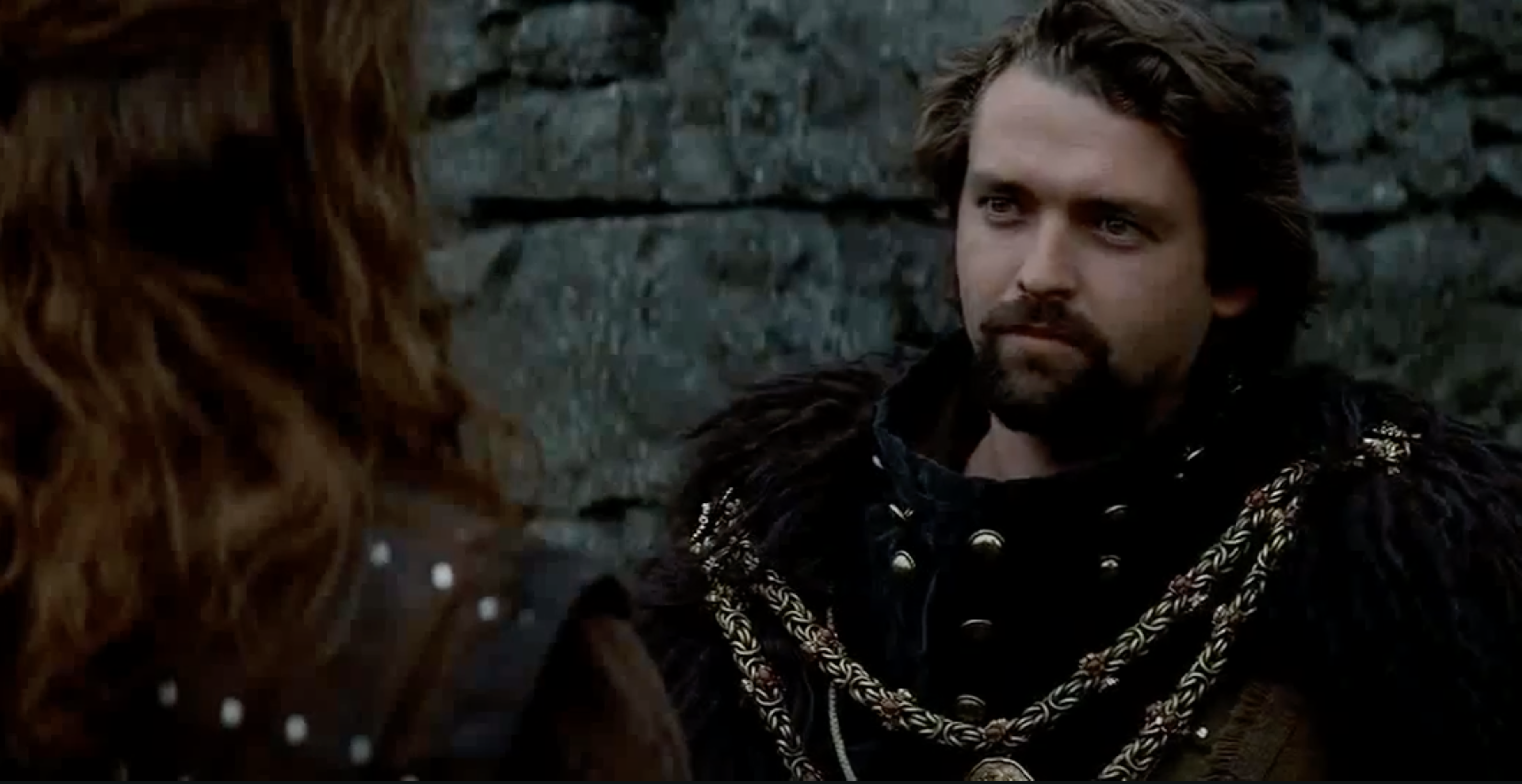
    Yes, the lords have lands and castles. But their supporters will follow them, if they are willing to lead.

    The other way to overcome collective action is to reject its very framing. The individual incentives are real. But the collective incentives are also real. As many have said over the years, we hang together, or we hang apart. Deep civil society is fragmented, individuated; the current moment requires a collective response based on collective recognition of our mutual fate and our mutual strength. So be it.

    Shining with brightness / Always on surveillance / (The eyes, they never close) / Emblem of vigilance

    NOTE

    The header image is from Emily Flake in this week’s The New Yorker.

    * There is plenty to worry about for these groups too. But that is a different essay.

    ** Ask a lawyer why they will do legal work that benefits terrible people. The answer is not because they deserve it. The answer is because our constitutional order requires it.
  • Everyday Authoritarianism is Maddening and Stupid

    Everyday Authoritarianism is Maddening and Stupid

    Eight years ago, I wrote a post on this blog entitled “Everyday Authoritarianism is Boring and Tolerable.” A slightly edited version did some numbers when it appeared at Vox as “Life in authoritarian states is mostly boring and tolerable.” The point was to illustrate the banality and ordinariness of authoritarian politics in the modern world. In most modern cases, authoritarian rule is not immediately dangerous to most people. Life goes on, mostly like normal, most of the time, for the majority. I was inspired by the case of Malaysia, a perfectly lovely and stable country that had endured authoritarian rule for nearly half a century.

    Living in Malaysia and working on Malaysian politics has taught me something important about authoritarianism from my perspective as an American. That is, the mental image of authoritarian rule in the minds of most Americans is completely unrealistic, and dangerously so….

    The mental image that most American harbor of what actual authoritarianism looks like is fantastical and cartoonish. This vision of authoritarian rule has jackbooted thugs, all-powerful elites acting with impunity, poverty and desperate hardship for everyone else, strict controls on political expression and mobilization, and a dictator who spends his time ordering the murder or disappearance of his opponents using an effective and wholly compliant security apparatus. This image of authoritarianism comes from the popular media (dictators in movies are never constrained by anything but open insurrection), from American mythmaking about the Founding (and the Second World War and the Cold War), and from a kind of “imaginary othering” in which the opposite of democracy is the absence of everything that characterizes the one democracy that one knows.

    Still, that fantastical image of authoritarianism is entirely misleading as a description of modern authoritarian rule and life under it. It is a description, to some approximation, of totalitarianism. Carl Friedrich is the best on totalitarianism (see PDF), and Hannah Arendt of course on its emergence (PDF). But Arendt and Friedrich were very clear that totalitarianism is exceptional as a form of politics.

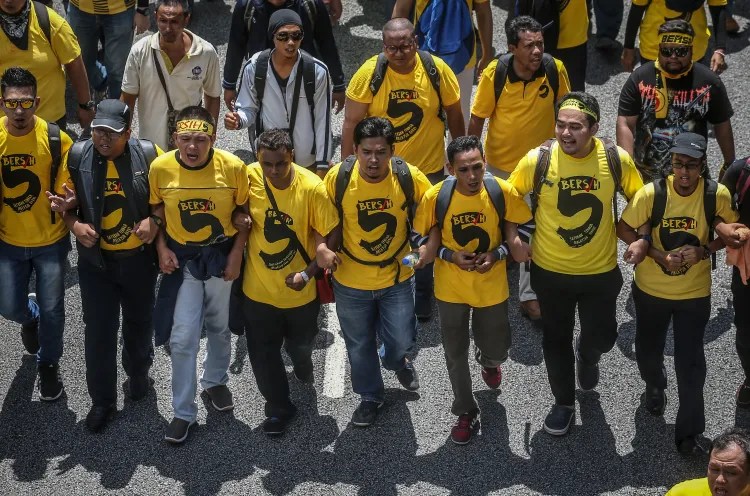
    The reality is that everyday life under the kinds of authoritarianism that exist today is very familiar to most Americans. You go to work, you eat your lunch, you go home to your family. There are schools and businesses, and some people “make it” through hard work and luck. Most people worry about making sure their kids get into good schools. The military is in the barracks, and the police mostly investigate crimes and solve cases. There is political dissent, if rarely open protest, but in general people are free to complain to one another. There are even elections. This is Malaysia, and many countries like it.

    Everyday life in the modern authoritarian regime is, in this sense, boring and tolerable. It is not outrageous. Most critics, even vocal ones, are not going to be murdered like Anna Politkovskaya, they are going to be frustrated. Most not-very-vocal critics will live their lives completely unmolested by the security forces. They will enjoy it when the trains run on time, blame the government when they do not, gripe at their taxes, and save for vacation. Elections, when they happen, will serve the “anesthetic function” that Philippe Schmitter attributed to elections in Portugal under Salazar in the greatly underappreciated in 1978 volume Elections without Choice.

    I wrote that essay in anticipation of the January 2017 inauguration of President Donald John Trump. The ensuing eight years have been a whirlwind: a disorganized presidency, a global pandemic, and failed insurrection in Washington DC, and now a return of President Donald John Trump to the White House.

    Although life under authoritarianism is mostly boring and tolerable, it is also maddening and stupid. It is maddening because everyone, at some level, recognizes what is happening; citizens who value freedom and liberty either distract themselves with shiny baubles and idle games, or they speak out to a political class that is unwilling or incapable of responding. It is stupid because everyone knows that their government lies compulsively, repeatedly, openly, over the most trivial thing and for the most contemptable purposes.

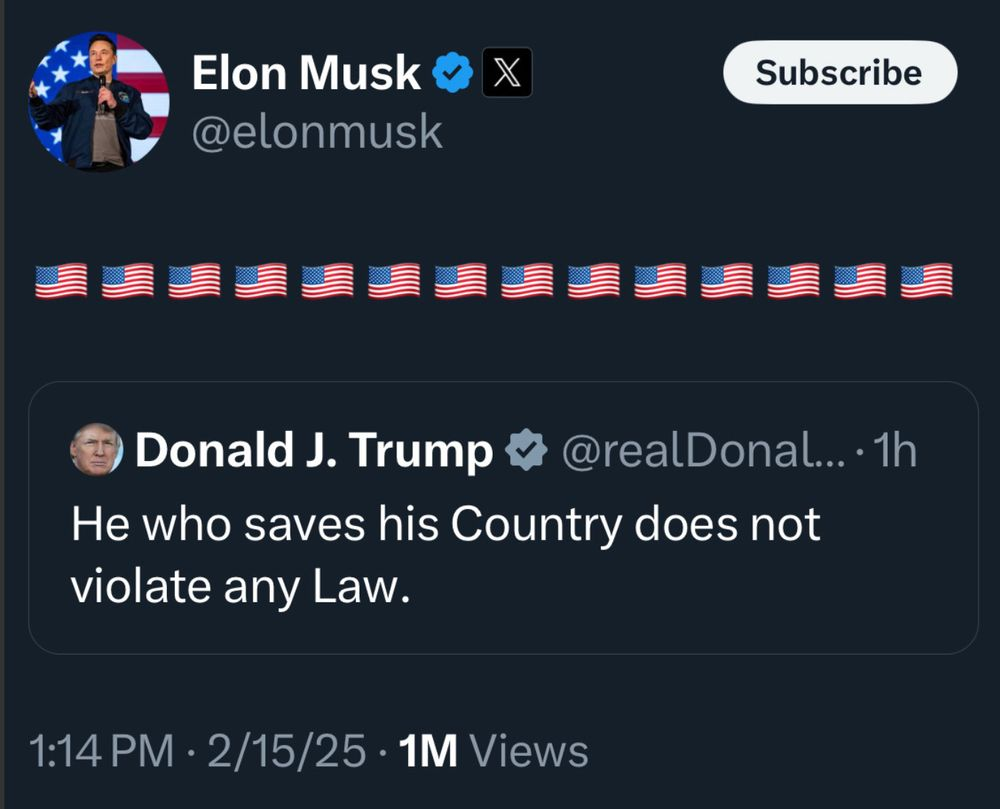
    Indeed, the speed with which the second Trump administration has sidelined the United States Constitution has been breathtaking. Less than a month after taking office, he has declared himself to be above the law, with the full endorsement of the richest and most powerful man in the world (who is also openly a Nazi-aligned white nationalist, see all fourteen flags):

    It is hard to imagine such a statement from an elected politician in normal times. The United States, though, is no longer a normal democracy, if it is functionally a democracy at all.

    The Trump administration is not only sidelining the Constitution, it is being given free rein to implement any decision that Elon Musk desires by weak, do-nothing Congress. The Democrats in opposition struggle to find a voice because they lost. The Congressional GOP, for its part, no longer has a purpose. They have the numbers to pass laws and hold the executive branch to account, but will not exercise them. This is tragically shortsighted, for as the Founders understood, a Congress that surrenders its power to the president will never claw that power back again. Frustration among Democrats is understandable, as they are the losers. Surrender by the GOP makes sense only as a form of dominance politics. If the Democrats are losers, then the Congressional GOP are cucks.

    This time around, I am less optimistic that life under authoritarianism will be boring and tolerable for most people. Some of my earlier points still stand:

    …asking if “the people” will tolerate authoritarian rule. The premise upon which this question is based is that authoritarianism is intolerable generally. It turns out that most people express democratic values, but living in a complicated world in which people care more about more things than just their form of government, it is easy to see that given an orderly society and a functioning economy, democratic politics may become a low priority. The answer to the question “will ‘the people’ tolerate authoritarian rule?” is yes, absolutely.

    But I was wrong about how visible an end to democracy would be.

    Most Americans conceptualize a hypothetical end of American democracy in Apocalyptic terms. But actually, you usually learn that you are no longer living in a democracy not because The Government Is Taking Away Your Rights, or passing laws that you oppose, or because there is a coup or a quisling. You know that you are no longer living in a democracy because the elections in which you are participating no longer can yield political change.

    This time around, there are quislings (look around). It is plain that the law is not on the administration’s side, but it is also clear that they are not constrained by any federal judge’s rulings. The Supreme Court will eventually need to hear these cases, and it has proven to embrace an expansive understanding of the exceptional power of the executive branch. And the Justice Department was just publicly eviscerated by the Trump administration, who forced the U.S. attorneys in New York to dismiss corruption charges against New York mayor Eric Adams in exchange for a political favor. Then Adams and Trump’s Border Czar, Tom Homan, went on TV and talked about it. And then Homan threatened Representative Alexandria Ocasio-Cortez for teaching people about their rights.

    All of this happened in the open. None of this is a secret, and there are no consequences. In the meantime, the administration has articulated a frightening interpretation of the architecture of the U.S. Constitution, holding that—in the words of the Vice President—“Judges aren’t allowed to control the executive’s legitimate power.” Everyone knows this is false. And yet we must hear it.

    Life is neither boring nor tolerable right now, just maddening and stupid. And if I am right, what will happen next is, ordinary people will look to anyone who can provide stability and order. When politics is maddening and stupid, people will be glad for boring and tolerable.