Author: tompepinsky

  • Teaching and Democracy in America

    Teaching and Democracy in America

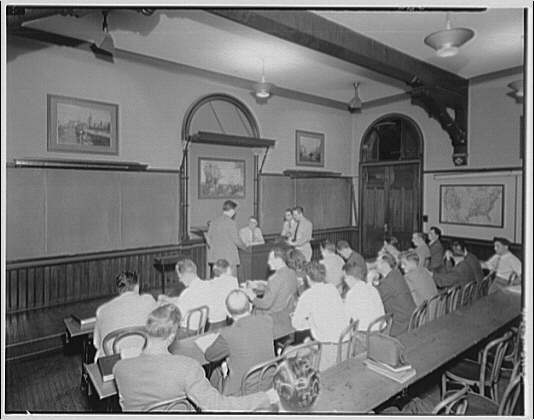
    I have a new essay just published at Liberties, titled “Teaching and Democracy in America.” In it, I reflect on the truly unprecedented task of teaching introduction to comparative politics in the United States in Spring 2025. Here’s the intro—click the link above to read the whole thing.

    Every year, hundreds of thousands of college students enroll in a course whose title is something like “Principles of Comparative Politics” or “Introduction to Comparative Government.” These are bread-and-butter courses for any modern political science department, but they aren’t the flashy or sexy ones. Students who study government and political science normally come to these courses with an interest in current events or great debates. Those looking for a deep dive into U.S. politics will take a course like “Introduction to American Politics.” Students who are interested in war and peace or climate or globalization will gravitate to “Introduction to International Relations.” Those more interested in the philosophical roots of politics will choose classes with names like “Introduction to Political Theory” or “Foundations of Political Philosophy.” Few college students are intrinsically interested in comparing things.

    As a result, comparative politics — the field in which I work, and which is concerned with the internal politics of countries around the world — has a reputation for being rather dry. Introductory courses in comparative politics are often about building vocabulary and learning concepts rather than current events, historical precedents, or deep philosophical debates. Students encounter equations and formulas and read analyses of the political systems of countries they will never visit. They learn about research designs and how to test hypotheses. These are the parts of academic political science that drain politics of all passion and principle. 

    It is understandable that comparative politics has this reputation. What is more interesting to you right now: unitary executive theory and the U.S. Constitution, or how prime ministers are selected in Australia? What student really cares that Fiji, Israel, and the Netherlands each have only one electoral district from which all legislators are elected, rather than 435 districts that each elect one legislator, as in the U.S. House of Representatives? So what that Argentina has a federal system of government, but Finland does not? What does it matter that Germany and Japan were late colonizers, or that Nigeria, Brazil, and Indonesia are multiethnic, multireligious states? Did you even know that these are the topics that a comparative politics course covers?

    In normal times, students like to argue, and they like controversy. But Spring 2025 is no normal time, especially for the American university and for students who want to learn about politics. The second Trump administration treats universities as hotbeds of radicalism and anti-Americanism, and has used its control over federal research funds as a cudgel to threaten administrators and punish researchers. Everything is fraught, and anyone teaching anything controversial is on high alert. Should we talk about what’s going on in the current administration? Should we talk about what’s going on in Ukraine? In Gaza? Among our students? With our friends and our loved ones? Students are just as nervous as we are, and just as hesitant to share their views and to speak their minds, especially those who are not U.S. citizens.

    This is the context in which I taught introductory comparative politics to my own undergraduate students this spring. It was an ordinary class taught under extraordinary circumstances, both for my university and for my country. By the end, the experience had changed me, both as a teacher and as a citizen. 

  • The Institutions Are Held Together by Values

    The Institutions Are Held Together by Values

    Happy Liberation Day! April 2 is the day that Americans gather together to learn how much prices will increase from tariffs on U.S. allies and partners imposed by the Trump administration. But this Liberation Day is special because of another, less spectacular event in U.S politics: an “audacious” plan by Senate Republicans to bypass the Senate’s parliamentarian and rule that “extending President Trump’s 2017 tax cuts won’t add to the deficit.”

    This is arcane legislative politics, but it is very consequential. In a narrow sense, it matters because, everyone knows that extending the tax cuts will add to the deficit. The reason why the Senate majority needs to bypass the parliamentarian is because standard budget scoring by the parliamentarian will show that to be true. The GOP cannot have that, because of the particularities of how budget bills can be debated and voted on in the Senate. They need to say that tax cuts won’t affect the budget.

    The GOP will bypass the parliamentarian, in other words, because the parliamentarian will make it difficult to pass the tax cuts. Working backwards, if your priority is tax cuts—and you don’t care about the deficit—change the procedures to get what you want.

    In a much broader sense, though, bypassing the parliamentarian to extend tax cuts matters because of what it reveals about how the standard models of U.S. politics no longer apply.

    To see what I mean, step back and consider that legislative politics in any country is a game in which several hundred legislators debate thousands of issues. Each issue, in principle, can be a bill, which succeeds or fails under majority voting rules; moreover, each bill can (and normally does) address multiple issues at once. Unless all legislators tend to line up on the same side of each issue, the result should be chaos (literally). How does anybody get anything done?

    The answer is by bundling issues into platforms that are relatively coherent across time, so that legislators indeed line up on one side or the other, predictable. This may be facilitated by strong parties that can compel their members to toe the line, or by some sort of institutional system that induces partisans to act accordingly. In the U.S. the standard interpretation of why there is not chaos in the House and Senate is that “real-world legislative practices constrain the instability of PMR by restricting the domain and the content of legislative exchange” (Shepsle and Weingast 1981).

    In other words, the rules, norms, and practices of our legislative branch create order out of chaos.

    The immediate response you should have is, why does anyone follow those rules and norms? Put differently, there is no source of the rules, norms, and practices of the legislature aside from the legislators themselves. Why would they write rules or adopt practices that constrain them from achieving their objectives? As I wrote last year, the notion that legislative practices are the source of order

    …shows how you can get equilibria (and, hence, regular order) in a multidimensional policy space. Substantively, it is a way to explain why there is no chaos in Congress. But the debate … is whether or not this theoretical solution is satisfying: is it satisfying to posit that the answer to the question “why is there order in Congress?” is “because legislators care about Congressional order”?

    I thought then, just as I did in graduate school and still do now, that the answer is obviously no. If politics is only orderly when the people who hold power want it to be orderly, that means that order doesn’t come from legislative structure or norms or procedures. Instead, those are tools for the exercise of power. As William Riker wrote way back in 1980,

    Disequilibrium, or the potential that the status quo be upset, is the characteristic feature of politics…. institutions are no more than rules and rules are themselves the product of social decisions. Consequently, the rules are also not in equilibrium. One can expect that losers on a series of decisions under a particular set of rules will attempt (often successfully) to change institutions and hence the kind of decisions produced under them… Thus the only difference between values and institutions is that the revelation of institutional disequilibria is probably a longer process than the revelation of disequilibria of taste.

    If we take this perspective, we can understand clearly why the Senate GOP will bypass the parliamentarian. Its preferences are for tax cuts, not legislative order under existing rules. Its policy is a loser under the rules, so they will change the rules in order to change the kinds of decisions that the legislative process produces.

    This makes sense as legislative hardball. Nothing is illegal here. The Senate GOP knows what it wants and will change the rules to get it. So what?

    Here’s where the title of this post comes in. You can use this relatively obscure example of the Senate parliamentarian’s role in budget scoring to understand why U.S. democratic institutions are fraying. Stable institutions require common values. We can infer the absence of common values from the absence of stability.

    In other words, U.S. institutions were stable because they were held together by values, the common belief among elites and masses alike that orderly politics under existing rules and norms was more important than situational advantage on a policy proposal. That, for example, it was more important to have due process for everyone than to be able to kidnap people and send them to El Salvador, or that the executive branch would execute the laws passed by the legislative branch, or that you shouldn’t invade Greenland just because you feel like it.

    This perspective clarifies what the deep problem in U.S. politics is. There are plenty of reasons to complain about the specific institutional features of U.S. democracy, and there are plenty of reforms that I would implement if I could. But U.S. institutions can hold if people share a common purpose, if they value the institutions and the orderly resolution of political conflict more than their favored policy proposals.

    The root of the problem in U.S. politics is a crisis of values. Without common values, institutions are just expressions of power.