Author: tompepinsky

  • Shiraz Viognier Review

    As our time in Oz is drawing to a close, it’s time to review Shiraz Viognier blends based on our tasting notes. To start, we were unable to find the wine that we tried so many years ago. That said, we’ve tried a lot of them over the past couple of weeks, and here’s what we’ve learned.

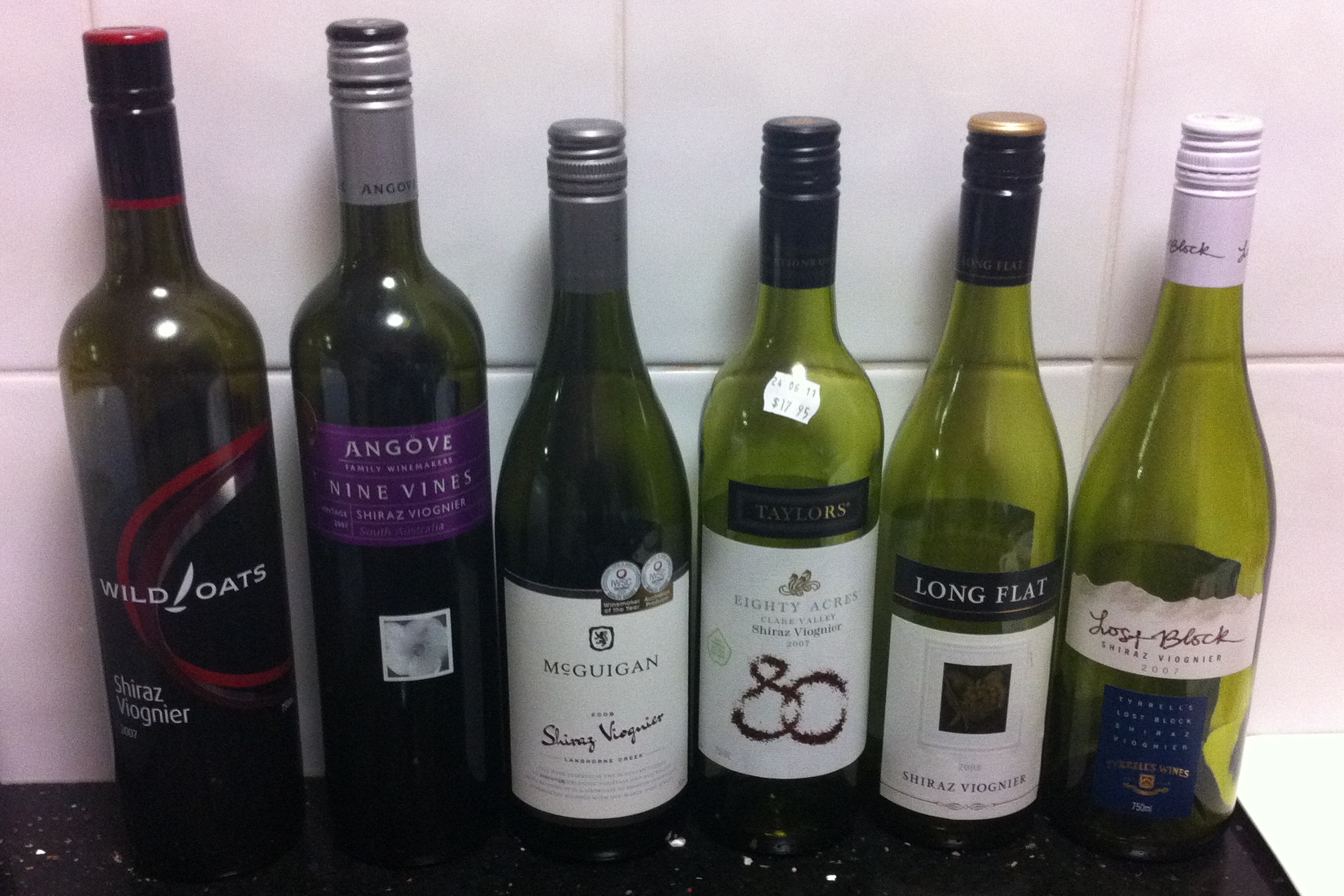
    Six Shiraz Viogniers–Tastiest on the Left
    IMG_0332

    The first thing that we learned is that we are tired of shiraz viognier blends. We won’t be drinking these again for awhile. It’s not that they aren’t good, we’ve just gone overboard on one style.

    The second thing that we learned is that the best SV blends are out of our price range. What various sources have rated the best red wine made in Australia is a SV blend from around Canberra, but we did not taste it. Who knows how good it could be.

    The third thing that we learned is that SV blends differ a lot, at least according to our non-expert palates. Ostensibly, the purpose of the blend is to improve the smell (eh, “bouquet”) and to smooth out the edges of a shiraz. We’re not sure what’s going on in these wines, but they varied from big, smooth, and what we (non wine experts) describe as “mouthy” flavors (Wild Oats, on the left) to thin, very acidic, and almost “alcohol-y” flavors (Lost Block, on the far right). The two on the left were quite good. The two on the right, not so much.

    So, in the end, lots more to study, and lots more to try in the future, and no great discoveries about the best exemplars of this variety. We are planning a night out for dinner tomorrow, and we will try one of the many other styles made around here then.
  • Perth

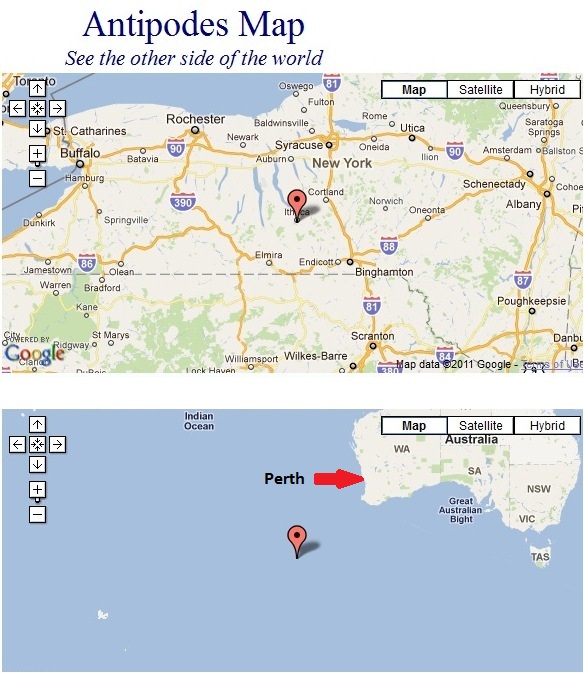
    I (TP) just returned from a quick trip to Perth for a presentation at Murdoch University. Well, the trip itself wasn’t quick (it’s a 4 hour transcontinental flight), but the stay was. Perth is interesting but different than “out east,” as they say there. It’s warmer there this time of year, and gets well into the 100s for weeks on end in their summer. The city is similar to Los Angeles in the sense that it is new, rapidly growing, and it just sprawls for miles and miles; compare that to Sydney and Melbourne, which are like older North American cities and feel more compact. Perth also happens to be just about as far as you can possibly go from Ithaca and still be on land.

    Ithaca’s Antipodes

    antipodes

    What’s most striking about Perth, though, is the economy. Perth is dominated–dominated–by the mining sector. There’s actually not much  mining done in Perth itself, but from what I understand the places that do all the mining are isolated and ferociously hot for most of the year (like the Kimberley), so lots of workers live in Perth and commute in (that commute, of course, is a 3 hour plane ride, but you get the point). Plus, Perth being the state capital and by far the largest city, it generally profits from the mining sector’s effects on the economy of Western Australia as a whole.

    According to everyone I spoke to in Perth, the huge increase in mineral wealth has generated the following outcomes. First, inflation, which doesn’t matter too much if you’re a miner or work for a mining company, but makes it hard for everyone else. Second, a construction boom, which meant that Perth weathered the GEC much better than you’d expect but which might be giving Perth a false sense of security. Third, a captured political system in which mining companies dominate state politics. Fourth, a weird kind of dependence on China and other resource-poor emerging economies: these are the main consumers of the iron and diamonds that they mine in Western Australia, and their hunger for resources is the basis of how the state’s economy works.

    All that said, Perth was really a nice place to visit and it would be great to return for a more extended period of time someday. Fremantle, where I actually stayed, was really nice. It’s a very different vibe from Sydney, Melbourne, or Canberra. Too bad it’s so incredibly far from home.