Author: tompepinsky

  • Lorraine Chuen on Food, Race, and Power

    This is relevant to my interests (HT Angry Asian Man).

    The amount of power that White people hold continues to both amaze and disturb me. White folks have the power to tease, torment, and mock (this food smells like poo, they’ll tell you, or perhaps: your lunch looks like worms, or maybe, simply: that’s disgusting, with a pinch of their nose). I spent an entire childhood lying about my favorite foods and being embarrassed about bringing noodles to school for lunch because of the casual racism that White folks learn apparently as early as middle school. White adults are no better: I recently had a coworker tell me, over dim sum, that chopsticks were the laziest eating utensil ever invented (whatever that even means).

    White folks have the power to torment, often without consequence; but the special thing about White people is that they also have the power to make a trip to your home country for a month or maybe twelve, get inspired, and dictate when your previously unpalatable dishes suddenly become socially acceptable, trendy, and profitable in the Western world. And inevitably, with the popularization of certain ethnic dishes, comes erasure. I can’t help but wonder, what becomes of dishes when they are prepared for the white gaze – or in this case, white palette? What remains of food, after it’s been decontextualized? What are flavours without stories? What are recipes without histories? Why are people of colour forgotten, over and over again, while their food (also: vocabulary, music, art, hair, clothing) are consumed and adopted?

    When I look at the repertoire of work that White chefs and restaurateurs have built on ethnic cuisine, it feels in a way, dehumanizing. White people are able to establish outrageously successful careers for being experts and authorities on the stuff that racialized folks do every day simply by existing. But of course, people of colour will rarely, if ever, be called experts on how to simply be themselves. It’s as if racialized folks and their ways of life are objects to be observed—study material, of sorts—rather than entire countries, cultures, and individual complex lives.

    It reminds me of this, which I wrote a year ago, and which may strike some readers as rather more (or, for some, rather less) urgent right now.
  • Finding and Eating the Old Malacca

    Yesterday I took a day trip from Kuala Lumpur to Malacca. I first visited in 2005, and things have changed. What then seemed like a pleasant little historic town has been aggressively developed for the tourist market. The development is still on-going: see this upcoming monstrosity. There are a number of enormous hotels and waterfront apartments still under construction, and the old neighborhood around Jonker Street and the river has been cleaned up and sanitized. More on this in a bit.

    Last time we visited we enjoyed some lovely Peranakan food, but never ventured out of the main tourist area near Bukit St. Paul and Jonker Street. I wanted to see if I could find some real Malacca Portuguese food, and had heard about a little hawker center in the Kampung Portugis (Portuguese settlement) neighborhood. So I set off to find it.

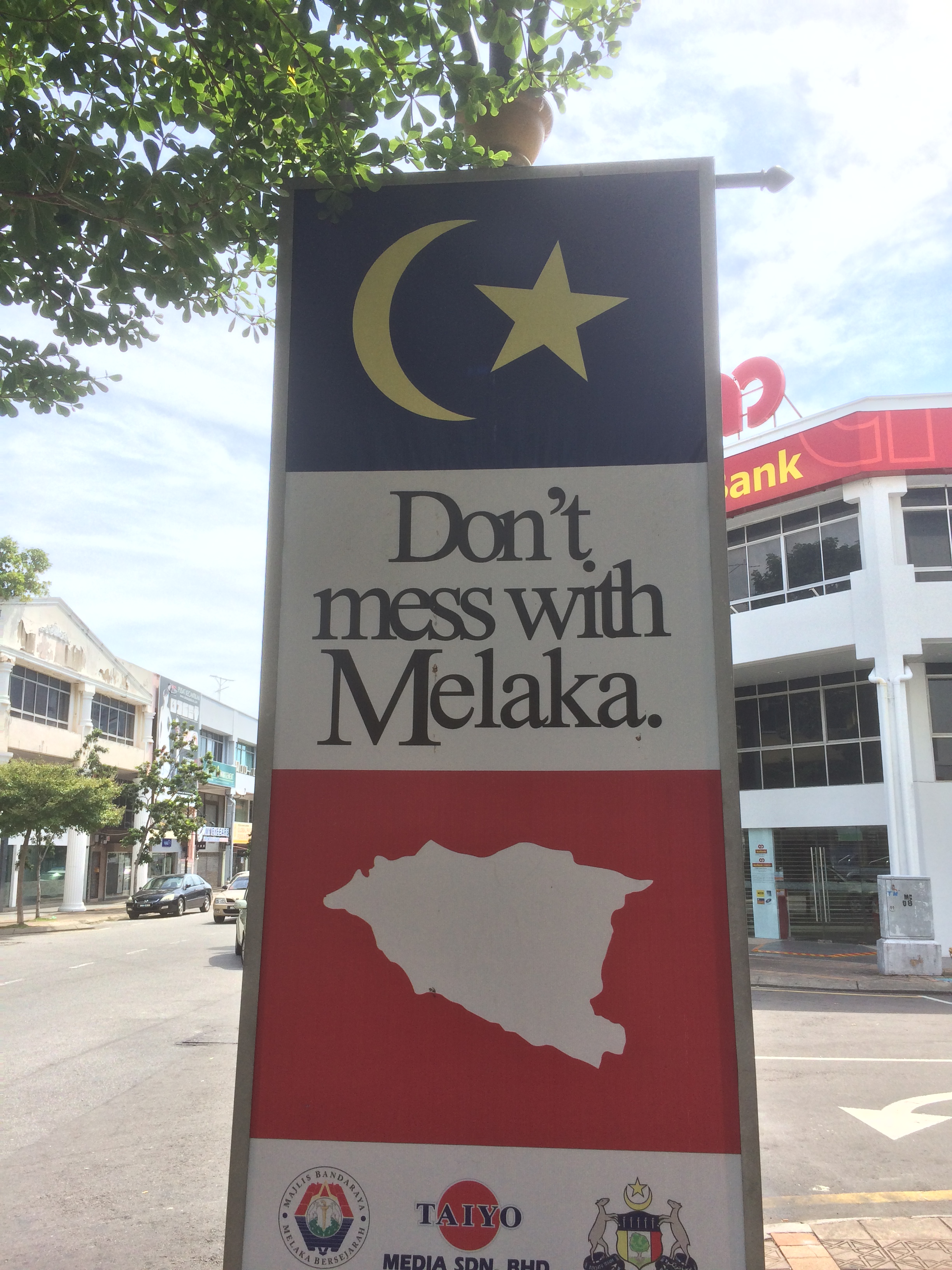
    Along the way, one of the best things I’ve ever seen.

    Don't Mess with Melaka.
    Don’t Mess with Melaka.

    It would have been better had they added “Remember Albuquerque!” but maybe that’s asking too much.

    Not having anything more than a tourist map, nor any data on my phone, I did the best I could. My walking route looked something like this

    Doing a full loop around the Hatten City project earned me my fair share of stares, but it did ensure—together with the midday sun at a balmy 88 degrees—that I was good and tired by the time I got there.

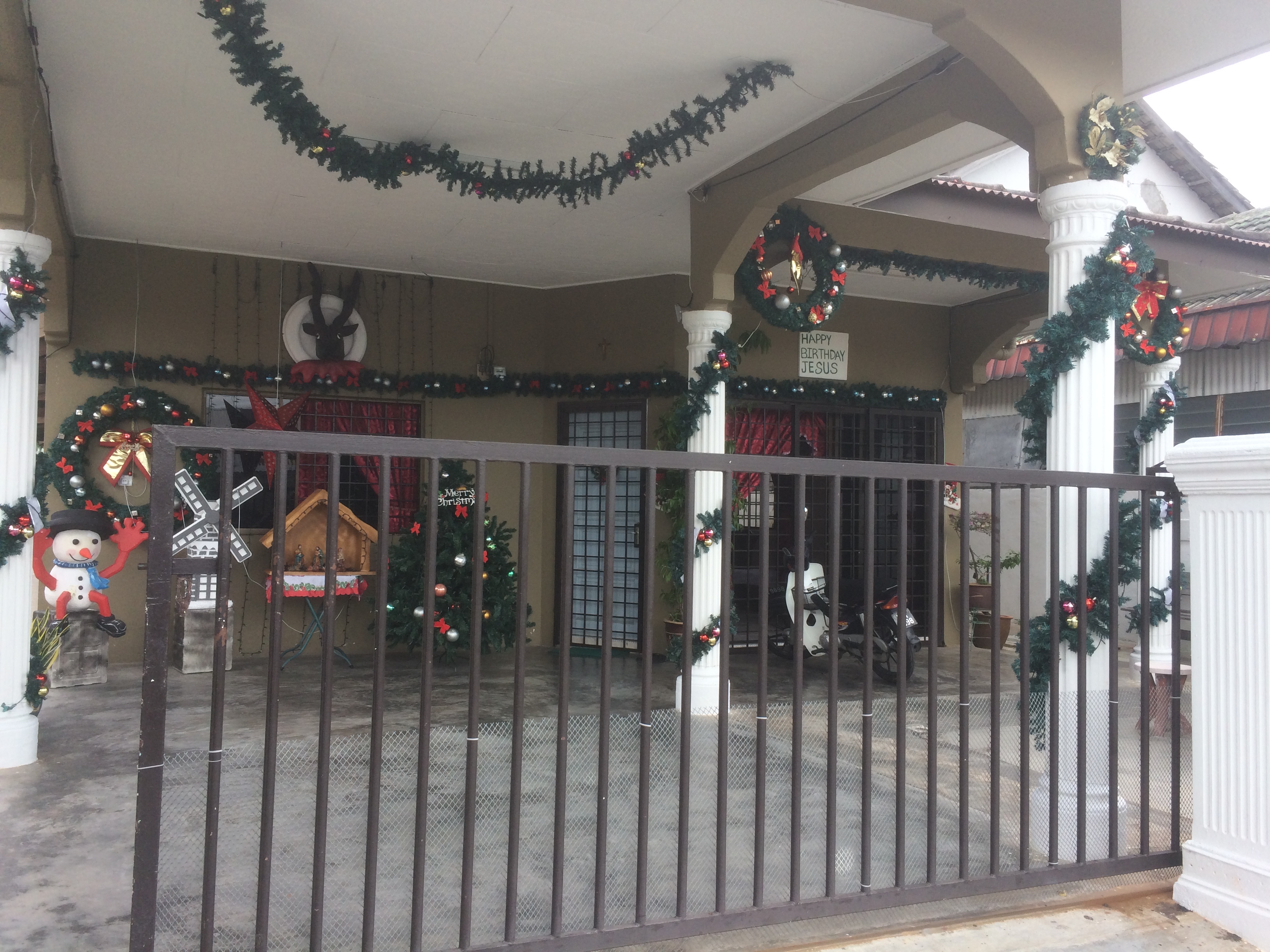
    The last bit of the walk was through a quiet residential area. What had seemed like generic middle class Chinese bungalows quite abruptly changed to bungalows decorated with crucifixes and Merry Christmas signs.

    Kampung Portugis Home
    Kampung Portugis Home

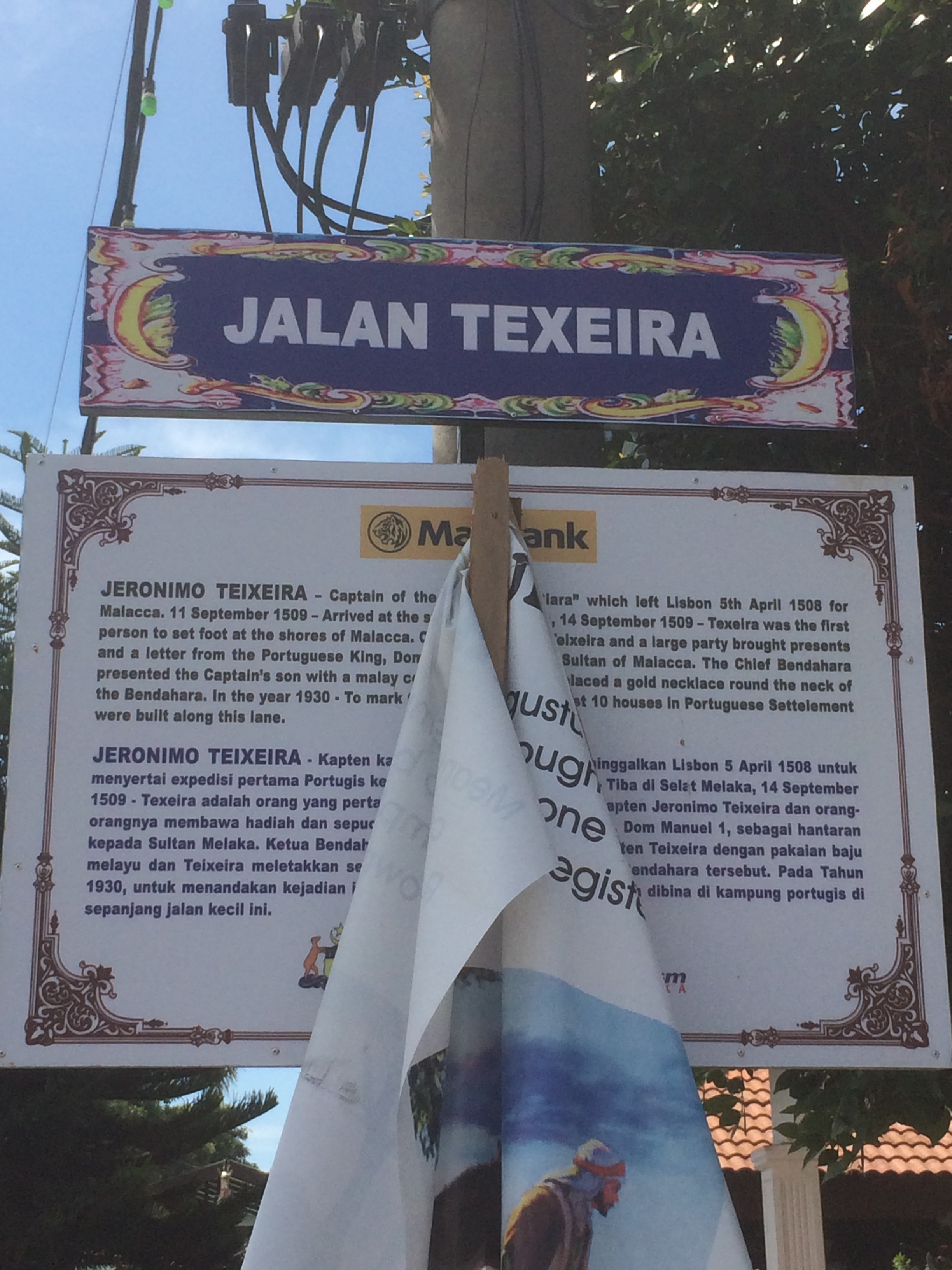
    Upon reading an intersection, I turned to my right and discovered that the street was now called “Texeira Street.”

    Texeira Street
    Texeira Street

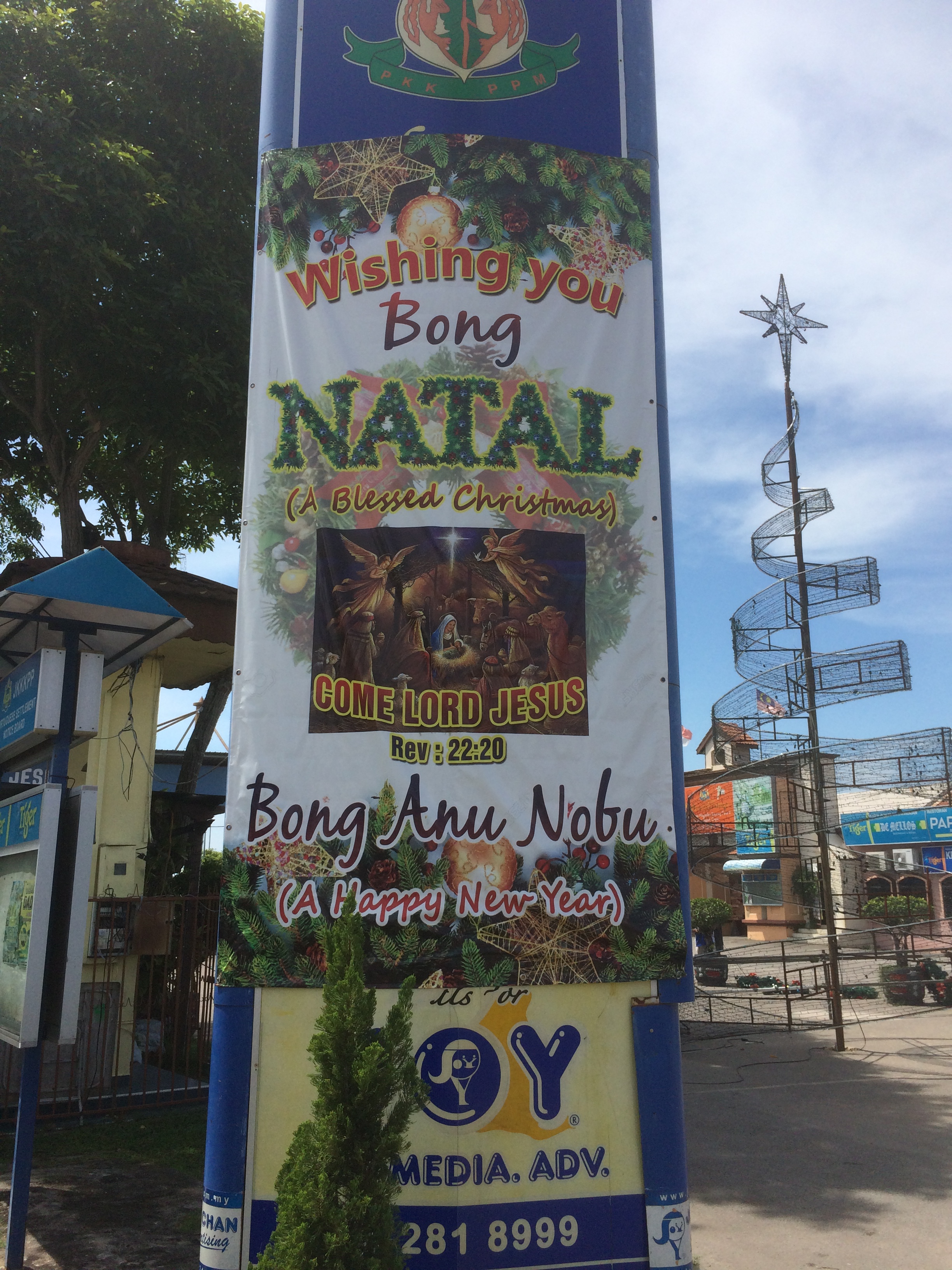
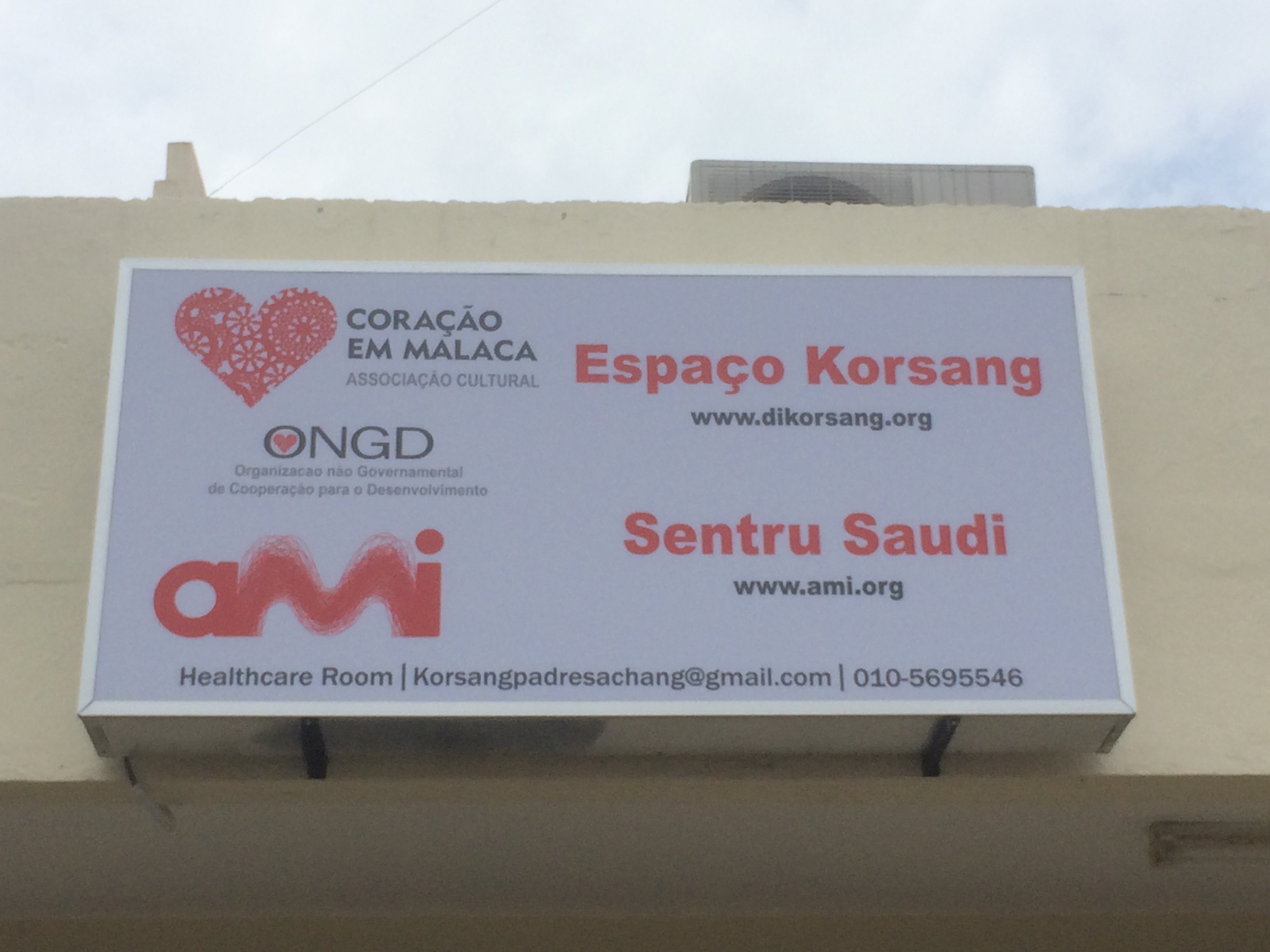
    From there it was not far to the restaurant area. I especially appreciated the signage in papia kristang.

    Bong Anu Nobu = Bom Ano Novo = Happy New Year
    Bong Anu Nobu = Bom Ano Novo = Happy New Year

    Espaço Korsang = Espaço Coração = "Heart Space" Sentru Saudi = Centro Saude = Health Center (a health clinic it seems)
    Espaço Korsang = Espaço Coração = “Heart Space”
    Sentru Saudi = Centro Saude = Health Center
    (a health clinic it seems)

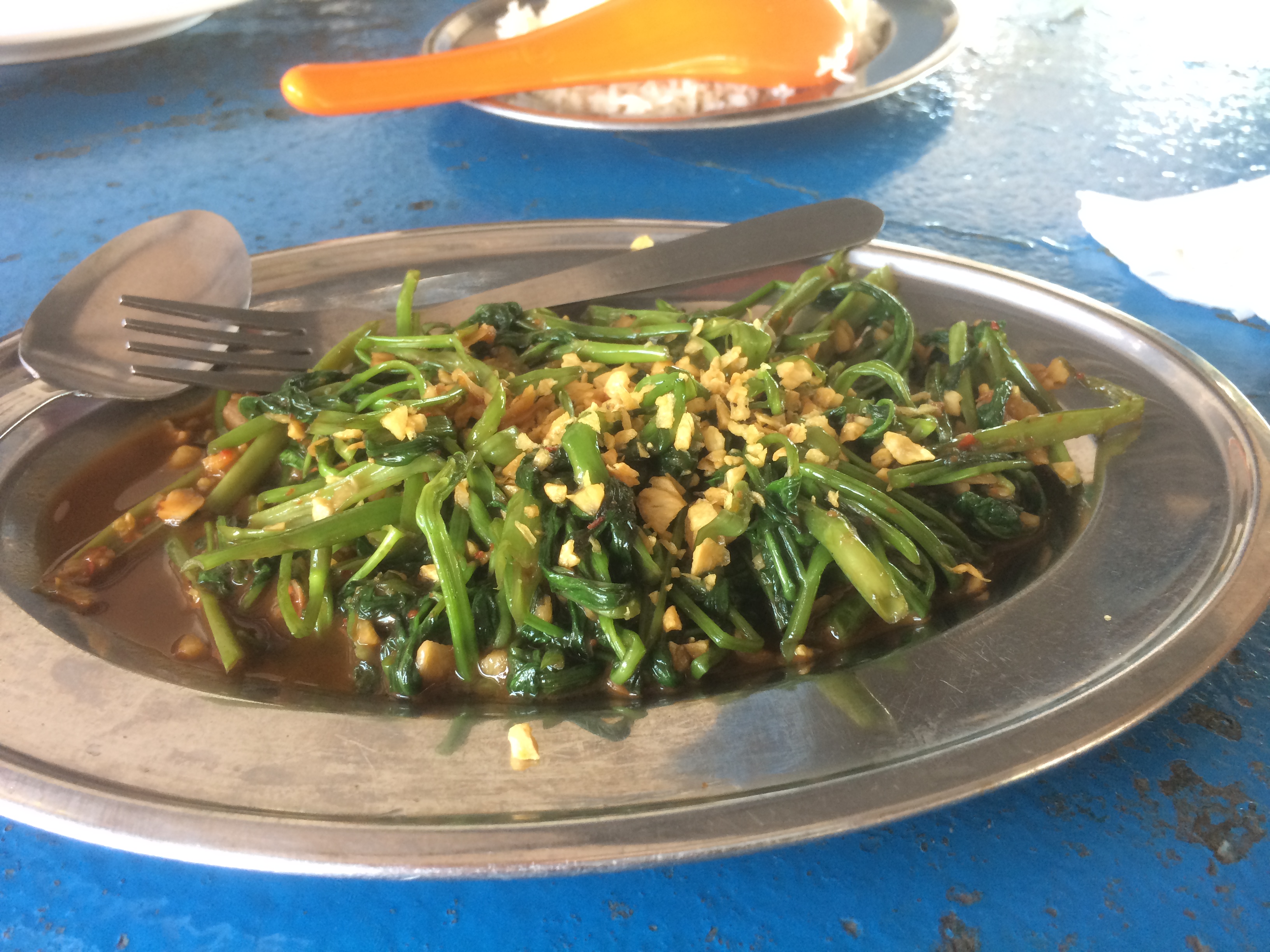
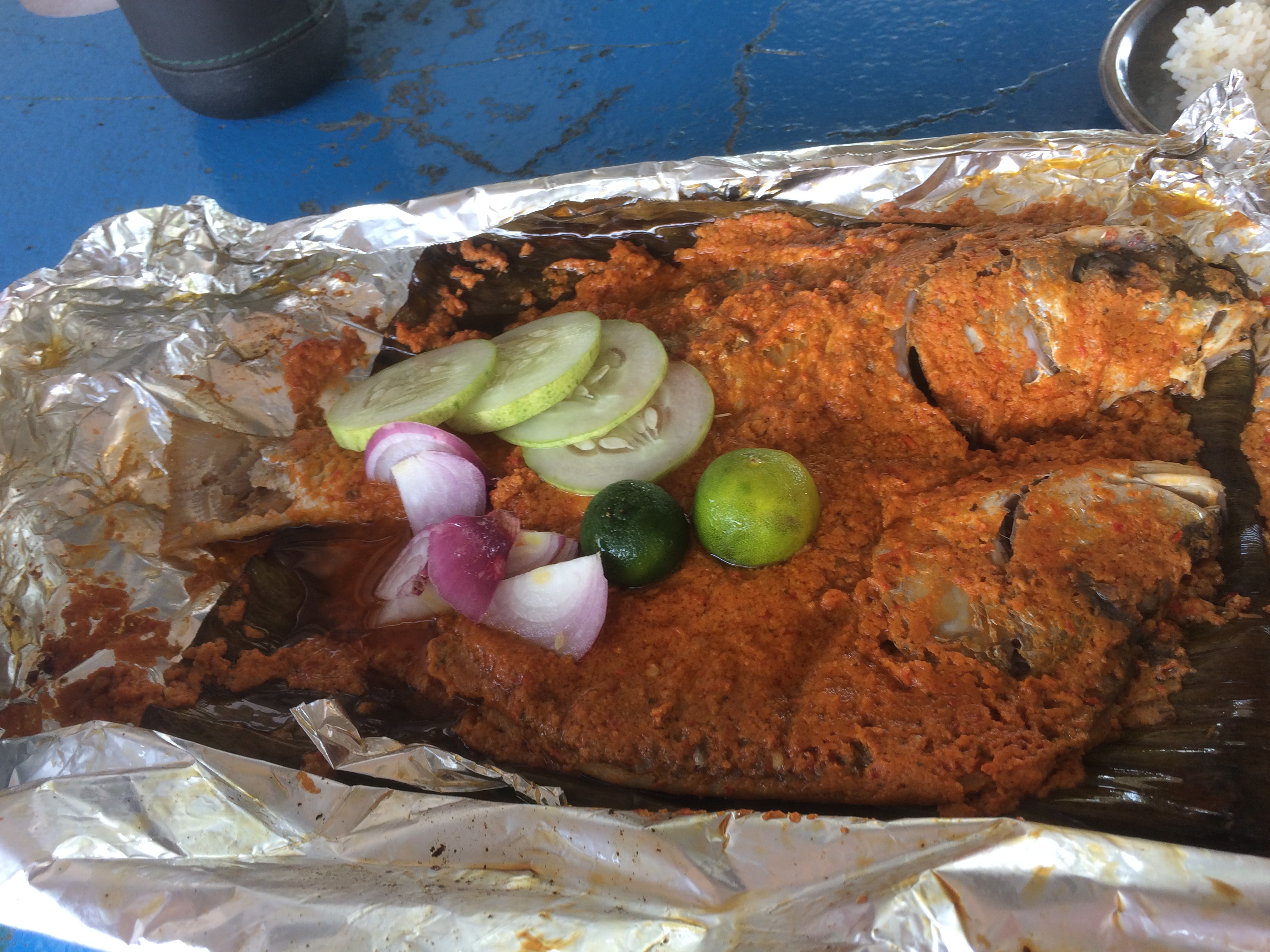
    Typical of such adventures, after walking for almost an hour in the hot sun, all of the restaurants were closed. Except, thankfully, for one. On the advice of the owner, I had spicy baked fish and kangkong belachan, which were both fantastic.

    img_3722

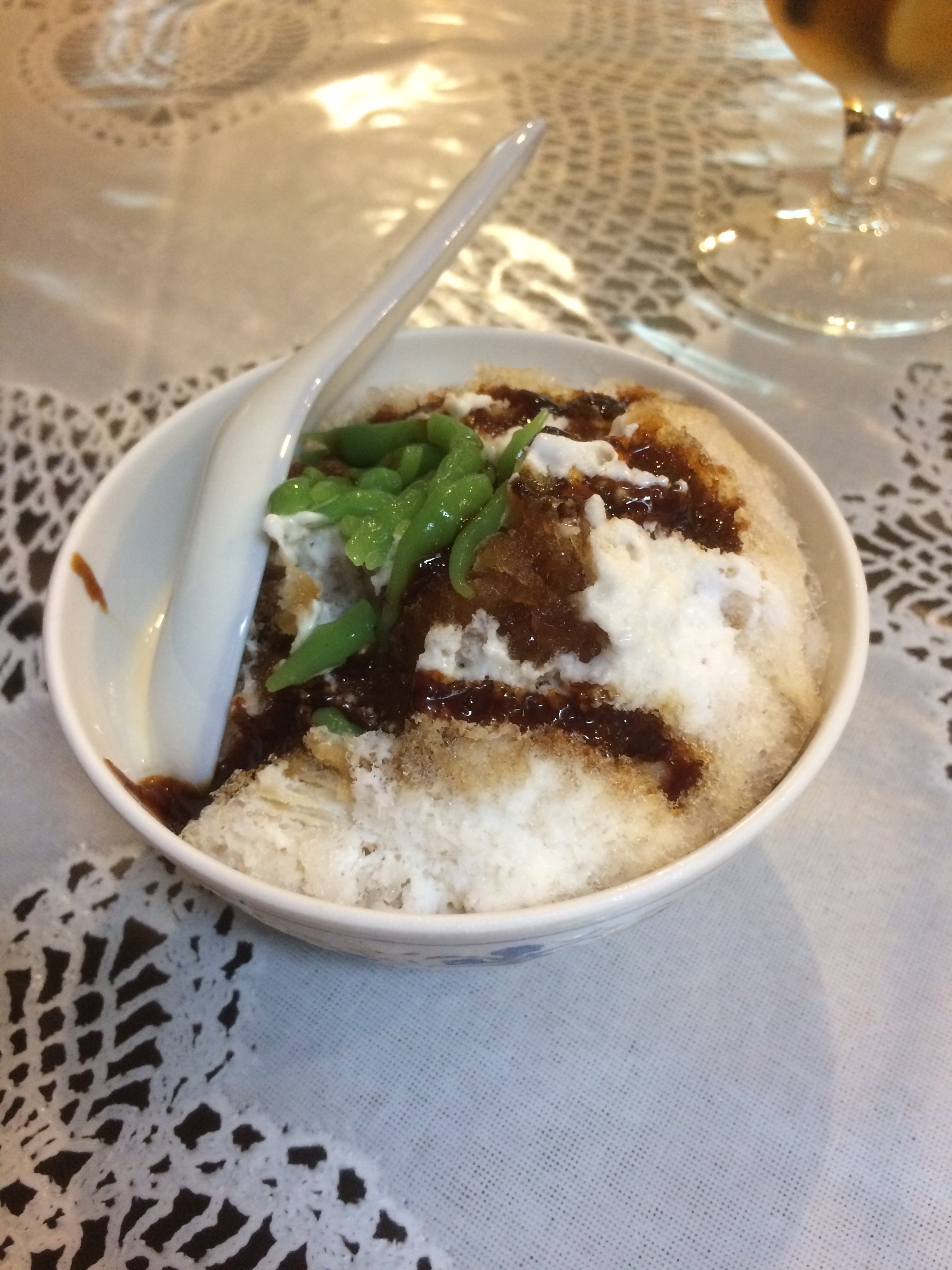
    I spent most of the rest of the afternoon wandering around the old Portuguese fort (called, as all Portuguese forts in tropical Asia seem to be called, “A Famosa”) and looking at old Dutch graves. I concluded the afternoon with an ice cold cendol at a very attractive little cafe called Straits Affair.

    Perfect Cendol
    Perfect Cendol

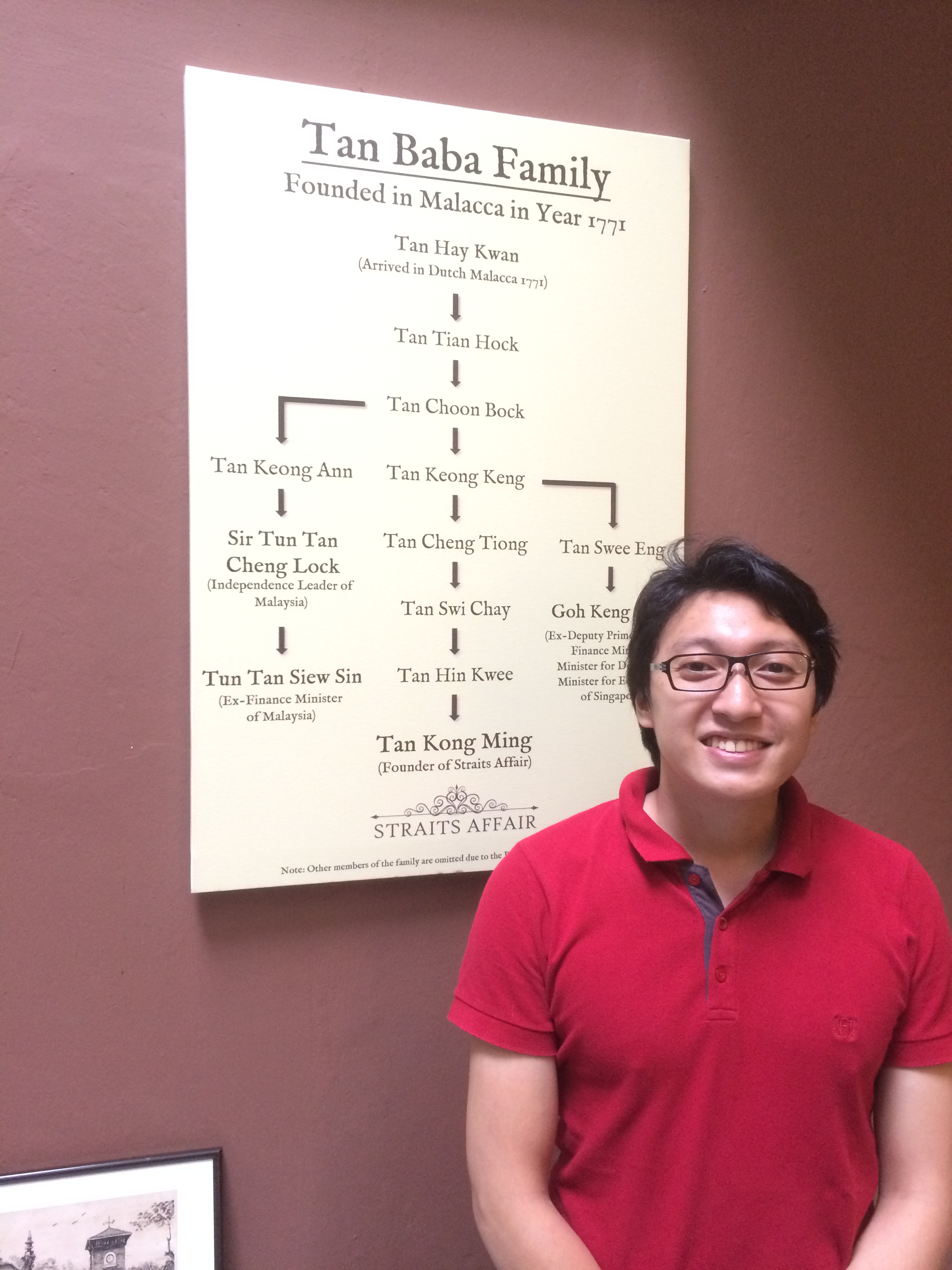
    I had a very nice conversation with the proprietor Isaac Tan, an eighth-generation Peranakan Chinese who is part of the same illustrious family that gave us Tun Tan Cheng Lock and Tun Tan Siew Sin.

    Isaac Tan Kong Ming with his family tree
    Isaac Tan Kong Ming with his family tree

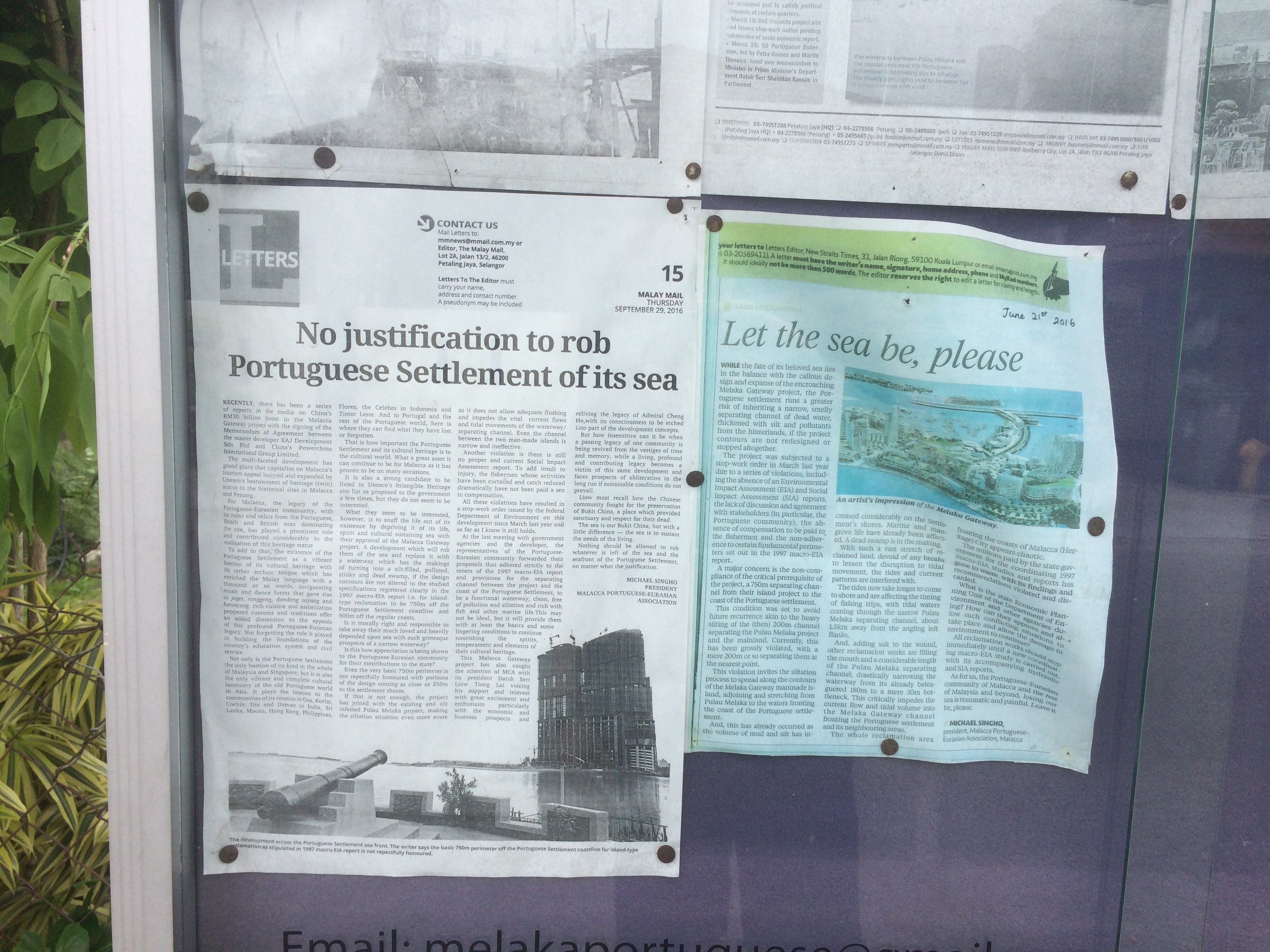
    Tan views the new and booming tourist development around Malacca as having really affected the local communities, and his cafe celebrates the old Baba-Nyonya food culture. He relates how the neighborhood in which he grew up, near Jonker Street, is now no longer affordable for the people who had long lived there. I saw similar signs in Kampung Portugis of local frustration with the new development.

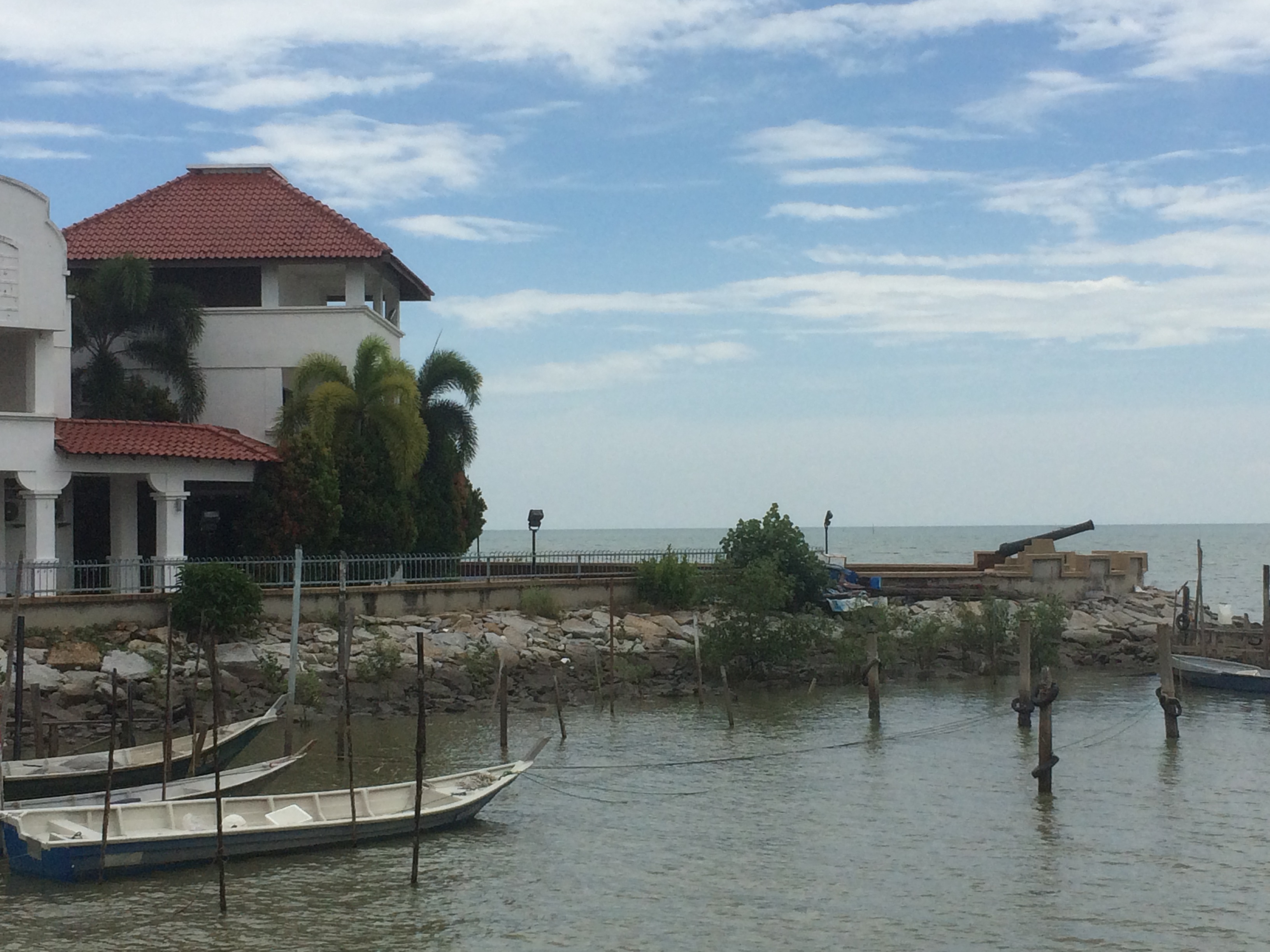
    Fishing boat jetty, Kampung Portugis
    Fishing boat jetty, Kampung Portugis
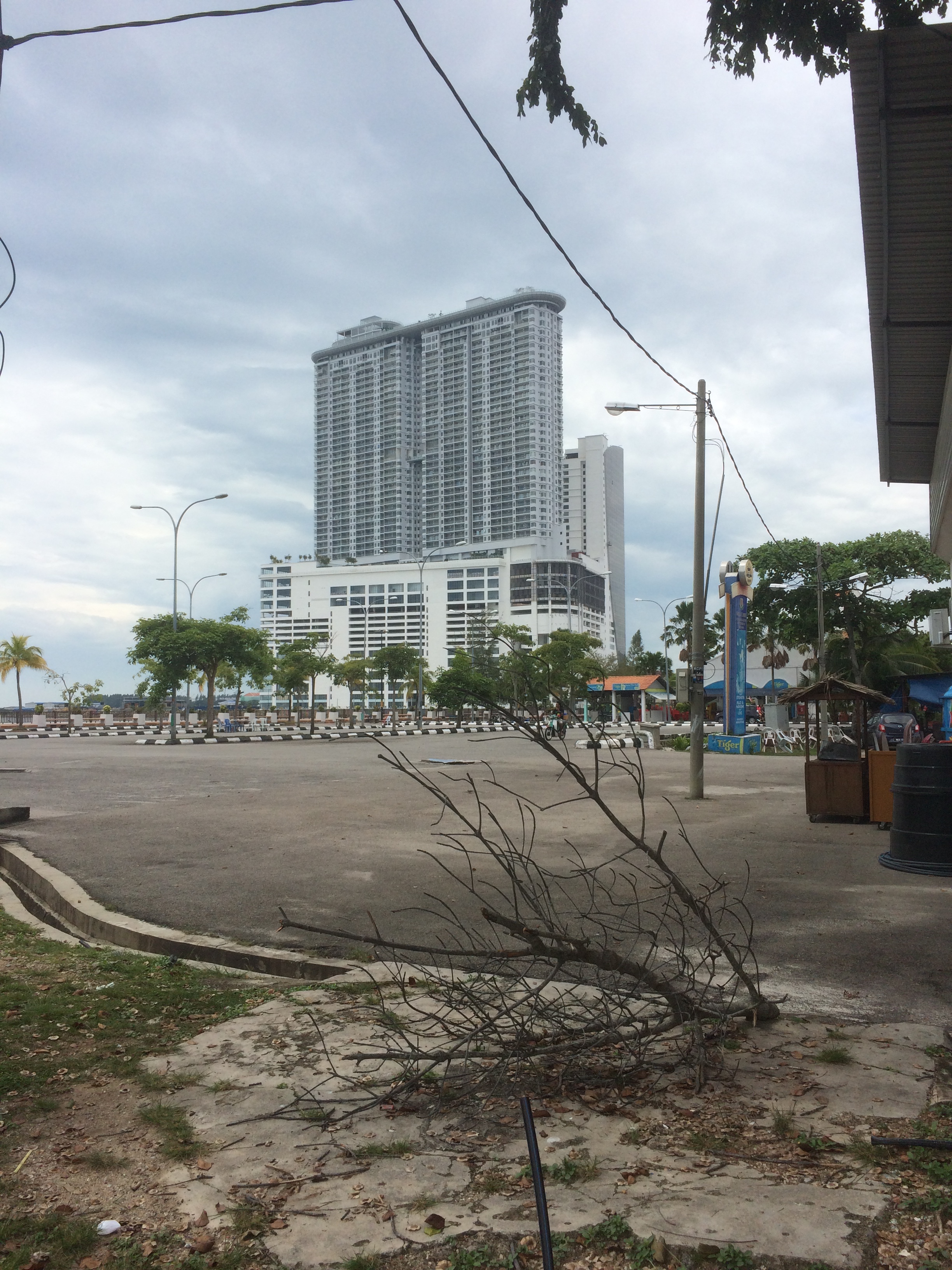
    Huge new construction dominating the Kampung Portugis skyline
    Huge new construction dominating the Kampung Portugis skyline
    Commentary on the community messageboard
    Commentary on the community messageboard

    It would be interesting to learn more about the political economy of the new tourism development boom. Ahem.