Category: Politics

  • Building a new capital city is popular—paying for it is not

    Building a new capital city is popular—paying for it is not

    Indonesia’s capital city, Jakarta, is one of the largest urban agglomerations in the world. It is famously trafficky, polluted, and vulnerable to floods and other natural disasters. And for decades, Indonesian presidents have dreamt of a new capital city—like Brasília, Canberra, or Astana—that is more secure, more centrally located within Indonesia, and more livable.

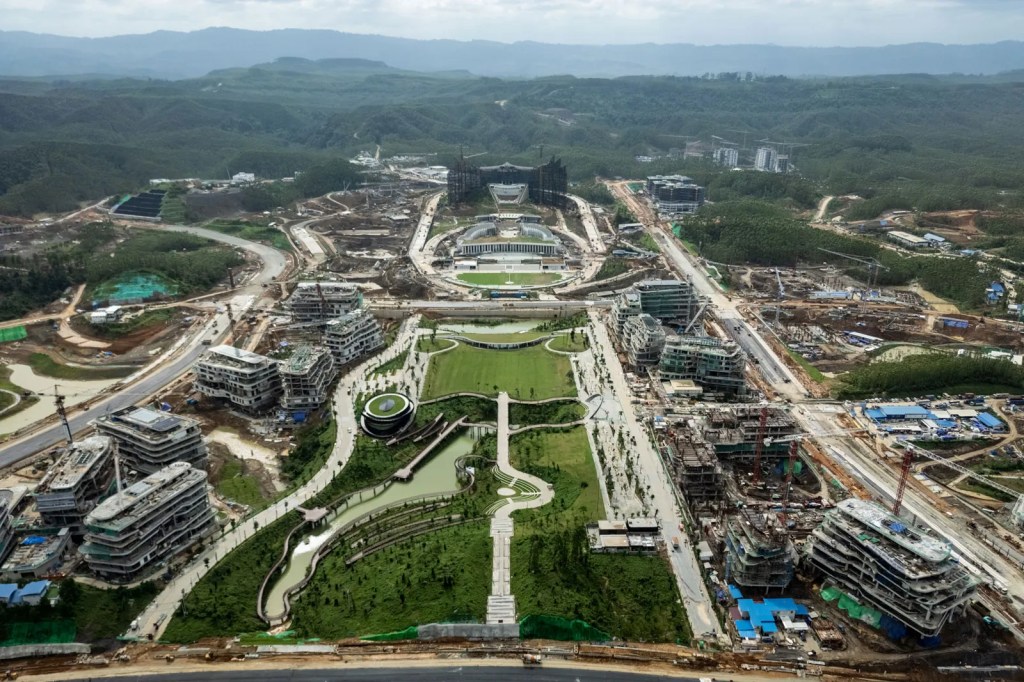
    Former president Joko Widodo brought these dreams closer to reality by announcing the creation of Nusantara, a new planned capital city located in the eastern part of the Indonesian portion of Borneo. Nusantara is envisioned to be a modern, green city that serves as the seat of the Indonesian government. Developed at the site of a former eucalyptus plantation, Nusantara will avoid some of the environmental challenges that Jakarta faces, and it will also be a more strategically defensible and geographically central capital city for this sprawling archipelagic state.

    Nusantara is broadly popular—just like the former president himself. But building a new capital city in a remote area is difficult, and it will be costly. Given these costs, is Nusantara actually politically feasible, especially in a difficult budgetary environment? My coauthor Aichiro Suryo Prabowo and I answer this question in a new paper (available here), entitled “From White Elephant to White Whale: The Economics and Politics of Nusantara.” The title tells you our answer. Here is the abstract.

    Indonesia’s new planned capital city of Nusantara is the most significant public works project in modern Indonesian history. We study the economics and politics of Nusantara from the perspectives of public finance and political economy. Combining data from official planning documents with a large body of original public opinion data, we find that the only plausible source of revenue for a project the size of Nusantara is the state budget, and that Indonesians do not support using state funds for this purpose. We discuss tradeoffs between infrastructural investment and other forms of public spending, and between present-day investment and future debt and tax burdens, in the context of a large public investment project of uncertain long-term value.

    Image credit: Britannica.
  • Teaching and Democracy in America

    Teaching and Democracy in America

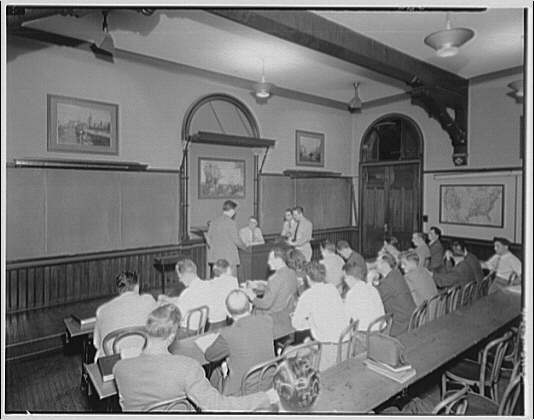
    I have a new essay just published at Liberties, titled “Teaching and Democracy in America.” In it, I reflect on the truly unprecedented task of teaching introduction to comparative politics in the United States in Spring 2025. Here’s the intro—click the link above to read the whole thing.

    Every year, hundreds of thousands of college students enroll in a course whose title is something like “Principles of Comparative Politics” or “Introduction to Comparative Government.” These are bread-and-butter courses for any modern political science department, but they aren’t the flashy or sexy ones. Students who study government and political science normally come to these courses with an interest in current events or great debates. Those looking for a deep dive into U.S. politics will take a course like “Introduction to American Politics.” Students who are interested in war and peace or climate or globalization will gravitate to “Introduction to International Relations.” Those more interested in the philosophical roots of politics will choose classes with names like “Introduction to Political Theory” or “Foundations of Political Philosophy.” Few college students are intrinsically interested in comparing things.

    As a result, comparative politics — the field in which I work, and which is concerned with the internal politics of countries around the world — has a reputation for being rather dry. Introductory courses in comparative politics are often about building vocabulary and learning concepts rather than current events, historical precedents, or deep philosophical debates. Students encounter equations and formulas and read analyses of the political systems of countries they will never visit. They learn about research designs and how to test hypotheses. These are the parts of academic political science that drain politics of all passion and principle. 

    It is understandable that comparative politics has this reputation. What is more interesting to you right now: unitary executive theory and the U.S. Constitution, or how prime ministers are selected in Australia? What student really cares that Fiji, Israel, and the Netherlands each have only one electoral district from which all legislators are elected, rather than 435 districts that each elect one legislator, as in the U.S. House of Representatives? So what that Argentina has a federal system of government, but Finland does not? What does it matter that Germany and Japan were late colonizers, or that Nigeria, Brazil, and Indonesia are multiethnic, multireligious states? Did you even know that these are the topics that a comparative politics course covers?

    In normal times, students like to argue, and they like controversy. But Spring 2025 is no normal time, especially for the American university and for students who want to learn about politics. The second Trump administration treats universities as hotbeds of radicalism and anti-Americanism, and has used its control over federal research funds as a cudgel to threaten administrators and punish researchers. Everything is fraught, and anyone teaching anything controversial is on high alert. Should we talk about what’s going on in the current administration? Should we talk about what’s going on in Ukraine? In Gaza? Among our students? With our friends and our loved ones? Students are just as nervous as we are, and just as hesitant to share their views and to speak their minds, especially those who are not U.S. citizens.

    This is the context in which I taught introductory comparative politics to my own undergraduate students this spring. It was an ordinary class taught under extraordinary circumstances, both for my university and for my country. By the end, the experience had changed me, both as a teacher and as a citizen.